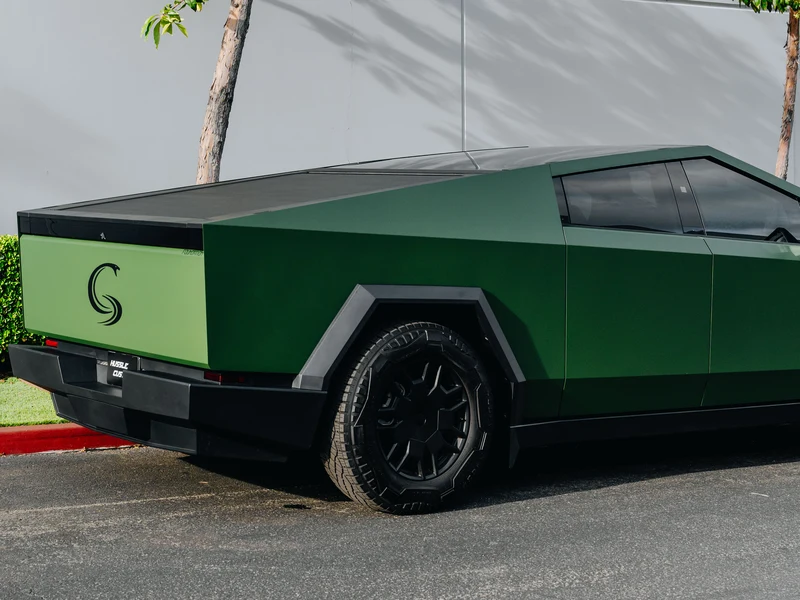
California tint laws: what's legal in 2026
Before talking about film types, you need to know the rules. California Vehicle Code Section 26708 is specific:
- Front side windows — must allow more than 70% of visible light through (70% VLT minimum). This means the front windows must appear essentially clear
- Rear side windows — any darkness allowed, as long as the vehicle has dual side mirrors (all modern cars do)
- Rear windshield — any darkness allowed with dual side mirrors
- Windshield — tint strip permitted above the manufacturer's AS-1 line only (typically the top 4–5 inches). No full windshield darkening
In practice, this means your front windows must stay at or above 70% VLT. Your rear windows and back glass can go as dark as you want — 5% (limo dark), 20% (dark), 35% (medium) — whatever you prefer. This is why most setups in LA have clear or barely visible tint on the fronts and much darker tint on the rears.
Ready for a quote?
The legal loophole that actually works: Ceramic clear film at 70%+ VLT on the front windows. It looks completely clear — you can't see the tint at all — but it blocks 60–80% of infrared heat. You get massive heat rejection while staying perfectly legal. This is the most popular front window setup in LA and the one we install most often.
Film types compared: dyed vs carbon vs ceramic vs metallic
Not all window tint is the same. The differences in performance are dramatic, and in LA's heat, the film type matters more than the darkness level.
| Film Type | Heat Rejection (IR) | UV Block | Signal Interference | Lifespan | Cost |
|---|---|---|---|---|---|
| Dyed | Low (15–25%) | Medium | None | 2–4 years | $ |
| Carbon | Medium (40–55%) | High | None | 5–7 years | $$ |
| Ceramic | High (40–70%) | 99% | None | 10+ years | $$$ |
| Metallic / Sputtered | High (50–70%) | 99% | Yes (GPS, phone, cameras) | 7–10 years | $$$ |

What we install: STEK ceramic tint
At our Van Nuys studio we install STEK ceramic nano-ceramic film. We picked STEK after testing multiple top-tier brands because it delivers the combination we care about for LA conditions: up to 80% infrared rejection, 99% UV block, zero signal interference, excellent optical clarity with minimal color shift, and a lifetime manufacturer warranty.
Other premium ceramic brands — STEK aside, the names you'll hear from reputable LA shops are Llumar IRX, XPEL Prime XR Plus, 3M Ceramic IR, and SunTek CeramicIR. All four are legitimate products. If your car already has one of them from a competent shop, you have a quality install. We just prefer STEK for our own work. For a brand-by-brand breakdown see our window tint brands compared post and our XPEL vs SunTek vs LLumar comparison.
See pricing and real examples at our ceramic tint page.
Why ceramic tint is the only real option in LA
Here's the thing about Los Angeles heat: most of it comes from infrared radiation, not visible light. When you're sitting in a parked car in the Valley at 2pm in August and the cabin is 155 degrees, that heat came through the glass as infrared — not because the windows are transparent to visible light.
This is why dyed tint fails in LA. A 20% dyed film looks dark — it blocks 80% of visible light — but it only blocks 15–25% of the infrared heat that's actually cooking you. The car looks tinted, but the cabin is still an oven. You've paid for appearance without function.
Ceramic tint blocks 60–80% of infrared heat regardless of how dark the film appears. A 70% ceramic clear film — one that looks completely invisible — rejects more heat than a 20% dyed film. That's the fundamental difference. Ceramic blocks the wavelength that matters. Dyed blocks the wavelength you can see.
Real-world performance in LA conditions
- Cabin temperature reduction — ceramic tint on all glass reduces interior temperature by 20–30 degrees Fahrenheit in direct sun. On a 100-degree day, that's the difference between 150-degree and 120-degree cabin temps when you get in
- AC efficiency — the climate system doesn't have to fight as hard to cool the cabin. It reaches target temperature faster and uses less energy — which matters for EV range
- UV blocking — quality ceramic film blocks 99% of UV radiation. Your dashboard, seats, and trim don't fade or crack nearly as fast. Your skin doesn't burn during your commute
- Glare reduction — especially on east-west commutes (like the 101 or 10) during sunrise and sunset. The film reduces harsh glare without making the windows too dark to see through at night
Why metallic tint isn't worth it despite high heat rejection
Metallic and sputtered films match or exceed ceramic's heat rejection numbers. So why not use them? Because they contain metal particles that interfere with electronic signals passing through the glass.
In a modern car — especially one with GPS navigation, Bluetooth phone connectivity, toll transponders, satellite radio, and driving assistance cameras — metallic tint causes problems. GPS accuracy drops. Phone calls get patchy. Toll transponders miss reads. And on vehicles like Tesla that rely on cameras for Autopilot, metallic film can cause image distortion.
Ceramic film achieves comparable heat rejection using nano-ceramic particles that don't interfere with any electronic signal. It's the only film type that delivers high heat rejection without compromising the electronics that modern cars depend on.
The most popular tint setups in Los Angeles
Based on what we install most often, these are the three most requested configurations:
Setup 1: The daily driver (most popular)
- Front windows: Ceramic clear (70% VLT) — legal, invisible, maximum heat rejection
- Rear windows: 35% ceramic — medium darkness, good privacy, comfortable at night
- Rear windshield: 35% ceramic — matching the rears for a clean look
Setup 2: The privacy build
- Front windows: Ceramic clear (70% VLT) — staying legal
- Rear windows: 20% ceramic — dark, strong privacy, noticeable contrast from outside
- Rear windshield: 20% ceramic — matching for a uniform dark appearance
Setup 3: The full heat rejection build
- Front windows: Ceramic clear (70% VLT)
- Rear windows: 20% or 35% ceramic
- Full windshield: Ceramic clear (legal, transparent, blocks infrared)
- Sunroof / glass roof: Ceramic — critical for panoramic roofs on Tesla, Porsche, BMW
What drives window tint cost in Los Angeles
| Film Type | Relative cost |
|---|---|
| Dyed | Lowest cost |
| Carbon | Mid-range |
| Ceramic | Higher — costs more up front, lasts longer |
| Ceramic + windshield | Highest cost |
SUVs and trucks cost more than sedans because there is more glass. Ceramic costs more up front than dyed — and that ceramic install will last 2.5–3 times longer while actually reducing cabin heat. Over the life of the vehicle, ceramic is cheaper than replacing dyed film twice.
Our price depends on your car and the package. Choose your car at husslecustomz.com/tint/ to see the exact price of each package; if your car isn't listed, Jay, the owner, confirms the price.
What to look for in a tint shop
Window tint is one of the most commonly botched installations. A bad tint job bubbles, peels, has visible contamination under the film, and looks worse than no tint at all. Here's what separates professional work from a cheap job:
- Precision plotter-cut film — the film is pre-cut by a computer to match your vehicle's exact window dimensions. No hand-cutting on glass, no razor blades near your defroster lines. Cleaner edges, faster install, zero risk of glass scratches
- Film brand transparency — reputable shops name the film they use. Llumar, XPEL, 3M, SunTek, Huper Optik, Formula One — these are established brands with published performance data and manufacturer warranties. If a shop won't tell you the brand, walk away
- Clean installation environment — dust and debris under the film is the most common sign of a poor install. Professional shops have dedicated, climate-controlled tint bays with filtered air. If they're tinting in an open garage with the door up, the result will show it
- Warranty on film and labor — quality ceramic film carries a written film warranty (ours on ceramic tint is lifetime). The shop should also warranty their installation work separately. If bubbling, peeling, or contamination appears, it should be corrected at no cost
- Edge-to-edge coverage — professional installs tuck the film into the window gasket or seal, leaving no visible gap between the film edge and the window frame. A gap between the film and the edge means the film was cut too small or wasn't tucked properly
Red flag: Any shop offering ceramic tint at a rock-bottom price on a sedan is either not using real ceramic film or cutting corners on installation. Quality ceramic film is a real material cost for the shop. If the all-in price barely covers that, something doesn't add up.
Special considerations for EVs and Tesla
Electric vehicles — and Teslas in particular — have specific tint considerations that shops should understand:
- Glass roof panels — Tesla Model 3, Model Y, Model S, and many other EVs have massive glass roof panels that let in enormous amounts of heat and UV. Tinting the glass roof with ceramic film is one of the highest-impact tint upgrades you can do
- Camera systems — Tesla Autopilot, GM SuperCruise, and other ADAS systems use cameras mounted behind the windshield and around the vehicle. Ceramic film is safe for these systems. Metallic film is not
- Range impact — less heat entering the cabin means less AC load, which means more battery range. In LA summer conditions, ceramic tint can noticeably improve range by reducing climate system energy consumption
- Factory tint variation — some Teslas come with a factory tint on the roof panel that varies in shade. A professional shop will measure existing VLT before recommending additional film to ensure consistent appearance
Frequently Asked Questions
What is the best window tint for Los Angeles?
Ceramic window tint is the best option for Los Angeles. It blocks 60–80% of infrared heat without interfering with GPS, phone signals, or vehicle cameras. It lasts 10+ years without fading, bubbling, or turning purple. In LA's extreme sun and heat, ceramic is the only film type that makes a measurable difference in cabin temperature.
What is the legal tint limit in California?
California requires front side windows to allow more than 70% VLT (visible light transmission). Rear side windows and the rear windshield can be any darkness as long as the vehicle has dual side mirrors. The windshield can have a tint strip above the manufacturer's AS-1 line. Most LA drivers go with ceramic clear on the fronts and 20–35% on the rears.
How much does ceramic tint cost in Los Angeles?
The cost of ceramic window tint in Los Angeles depends on the vehicle size, number of windows, and film brand. Sedans are on the lower end, SUVs and trucks with more glass are on the higher end. Premium ceramic brands like STEK, XPEL XR Plus, or Llumar IRX may cost slightly more but deliver the highest heat rejection ratings. We install STEK at Hussle Customz — choose your car at husslecustomz.com/tint/ to see the exact price of each package; if your car isn't listed, Jay, the owner, confirms the price.
Does ceramic tint interfere with phone signal or GPS?
No. Ceramic tint contains no metallic particles, so it has zero interference with cell phone signal, GPS navigation, Bluetooth, Wi-Fi, toll transponders, or vehicle cameras and sensors. This is one of the key advantages of ceramic over metallic or sputtered tint films, which can cause significant signal disruption.
Is ceramic tint worth the extra cost over regular tint?
In Los Angeles, absolutely. Dyed tint costs less upfront but barely reduces cabin heat, fades within 2–4 years, and often turns purple. Ceramic tint blocks 60–80% of infrared heat, lasts 10+ years, never fades or discolors, and doesn't interfere with electronics. The extra cost over dyed tint pays for itself in longevity alone — you'd need to replace dyed tint 2–3 times in the lifespan of one ceramic install.
Can you tint the windshield in California?
You can apply a tint strip on the windshield above the manufacturer's AS-1 line (typically the top 4–5 inches). You cannot tint the full windshield to a dark shade in California. However, ceramic clear film on the full windshield is legal and increasingly popular — it blocks infrared heat and UV without changing the windshield's appearance or light transmission.
Precision plotter cut. 99% UV block. No signal interference. 10+ year lifespan.