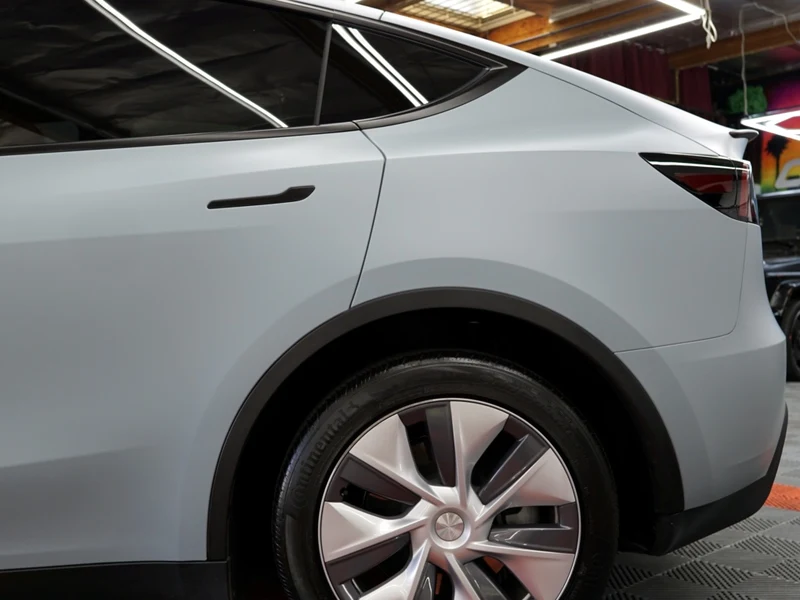
Why Tesla owners need to think differently about tint
Tesla vehicles are not like traditional cars when it comes to window tint. Three things make Teslas unique: they are packed with cameras and sensors that metallic tint can interfere with, they have massive glass surfaces that let in more heat than a conventional car, and their battery-powered AC draws range directly from the battery — meaning excess cabin heat literally reduces how far you can drive.
The wrong tint on a Tesla is not just a cosmetic problem. It can degrade Autopilot camera performance, weaken GPS and phone connectivity, and force the climate system to work harder, eating into your driving range. The right tint — specifically ceramic — solves the heat problem without creating new ones.
Why ceramic tint specifically for Tesla
Ceramic tint, plotter-cut, Los Angeles studio. Quote in 24h.
Every Tesla relies on a suite of cameras, sensors, and wireless systems that must work perfectly at all times. Here is why ceramic tint is the only smart choice:
No signal interference
Metallic and carbon tints contain conductive particles that can block or weaken radio frequency signals. In a Tesla, this matters more than in most cars because of the density of systems that rely on wireless communication:
- Autopilot cameras — Tesla's forward, side, and rear cameras need clear optical paths. Ceramic tint does not alter the light spectrum in ways that confuse camera sensors.
- GPS and navigation — metallic tint can degrade GPS signal quality, causing inaccurate positioning and navigation errors
- Cellular connectivity — Tesla's LTE/5G connection for streaming, traffic data, and over-the-air updates passes through the glass. Metallic tint can weaken this signal.
- Bluetooth and phone key — Tesla uses Bluetooth for phone key entry and in-car phone connectivity. Metallic tint can interfere with both.
- Garage door opener (HomeLink) — the built-in HomeLink system transmits through the windshield. Signal interference here means your garage door does not open reliably.
Ceramic tint uses non-conductive nano-ceramic particles. It blocks infrared heat, not radio frequencies. Every Tesla system works exactly as designed — no compromises, no workarounds.
Maximum heat rejection for glass-heavy vehicles
Tesla designed their vehicles with expansive glass. The Model Y and Model 3 have a continuous glass roof that runs from the windshield to the rear. The Model X has an even larger panoramic windshield. All this glass looks beautiful — and it lets in a tremendous amount of solar energy.
Tesla's glass does include some built-in UV and infrared filtering, but it is not enough to keep the cabin cool on a 95-degree Los Angeles day when the car is parked in the sun. Ceramic tint adds 40-60% additional infrared rejection on top of what Tesla's glass already provides. The difference in cabin temperature is immediate and significant.
Protects battery range
In an EV, the air conditioning system draws power directly from the battery. A hotter cabin means the AC works harder, which means less range. Ceramic tint reduces the thermal load on the cabin, which reduces how hard the AC has to work, which preserves battery range. On long drives or hot days, this can translate to meaningful range savings — some Tesla owners report 5-10% less climate energy usage after installing ceramic tint.
Recommended tint shades by Tesla model
Tesla Model Y
The Model Y is the most popular Tesla in Los Angeles, and its glass roof makes it one of the best candidates for a full ceramic tint installation. Here is what we recommend:
| Window | Recommended Shade | Notes |
|---|---|---|
| Front side windows | 70-85% VLT ceramic | California legal, nearly invisible, significant heat reduction |
| Rear side windows | 15-20% VLT ceramic | Dark, private, maximum heat rejection |
| Rear window | 15-20% VLT ceramic | Matches rear sides for uniform look |
| Glass roof | 50% VLT ceramic | Significant heat reduction without making cabin dark |
| Windshield | Clear ceramic (80%+ VLT) | Blocks infrared heat, legal, no visible tint |
The glass roof is the biggest heat entry point on the Model Y. Even at 50% VLT, ceramic film on the roof makes a dramatic difference in how hot the cabin gets when parked. Some owners prefer 35% for more heat rejection, but 50% keeps the interior feeling open and airy — which is the whole point of the glass roof.
Tesla Model 3
The Model 3 shares a similar glass configuration with the Model Y. The recommendations are nearly identical:
- Front sides: 70-85% VLT ceramic (California legal)
- Rear sides: 15-20% VLT ceramic
- Rear window: 15-20% VLT ceramic
- Glass roof: 50% VLT ceramic
- Windshield: Clear ceramic (80%+ VLT)
The Model 3's slightly smaller glass area means it heats up faster than the Model Y when parked in direct sun. Full ceramic tint with windshield coverage makes the biggest quality-of-life difference on the Model 3 — the cabin stays noticeably cooler and the AC does not need to run at maximum to bring the temperature down.
Tesla Model X
The Model X presents unique tinting considerations because of its falcon wing doors and panoramic windshield. The windshield extends further overhead than on any other Tesla, creating an even larger heat entry surface.
- Front sides: 70-85% VLT ceramic
- Rear sides (falcon wing windows): 15-20% VLT ceramic — these windows open with the door, so the tint must be installed carefully to handle repeated stress from door operation
- Rear window: 15-20% VLT ceramic
- Panoramic windshield: Clear ceramic is highly recommended — the extended windshield lets in more heat than any other Tesla model
Model X installations require experience with the falcon wing door geometry. The windows on these doors must be tinted with film that can handle the flexing and movement of the door mechanism without peeling or bubbling over time. This is not a vehicle for a budget tint shop.
Tesla Model S
The Model S follows a more traditional sedan glass layout, making it the most straightforward Tesla to tint:
- Front sides: 70-85% VLT ceramic
- Rear sides: 15-20% VLT ceramic
- Rear window: 15-20% VLT ceramic
- Windshield: Clear ceramic (80%+ VLT)
Newer Model S versions with the updated glass roof should also get roof ceramic in the 50% range, similar to the Model Y and Model 3 recommendations.
Tesla Cybertruck
The Cybertruck is a different animal entirely. Its stainless steel body does not absorb heat the way painted steel or aluminum does, but the glass panels — the windshield, rear window, and glass roof — are large and let in substantial solar energy.
Ceramic tint on the Cybertruck addresses two things: heat management through the glass surfaces and privacy. The Cybertruck's angular glass panels actually make tinting slightly more complex than a typical truck, but the results are dramatic. The stainless exterior paired with dark ceramic tint on the glass creates a striking visual contrast.
We recommend 15-20% ceramic on rear and side glass for the Cybertruck, with clear ceramic on the windshield. The glass roof section should get 35-50% ceramic depending on preference.

Common mistakes Tesla owners make with tint
- Choosing metallic tint to save money — the signal interference problems are not worth the savings. Autopilot issues, degraded phone key, and weak cellular connectivity will frustrate you daily.
- Skipping the windshield — the windshield is the largest glass surface on every Tesla. Leaving it without ceramic film means you are only addressing part of the heat problem.
- Ignoring the glass roof — the roof is a massive heat source, especially when parked. Skipping it saves a small amount of money but gives up a huge amount of comfort.
- Going too dark on front windows — California law requires 70%+ VLT on front side windows. Some Tesla owners push below the legal limit and deal with repeated tickets and fix-it hassles. Light ceramic on the front blocks more heat than dark dyed film anyway.
- Using a shop without Tesla experience — Tesla glass configurations, defroster lines, camera placements, and door mechanisms require specific knowledge. A shop that does mostly conventional vehicles may not know the nuances.
Frequently Asked Questions
Does tint interfere with Tesla Autopilot cameras?
Ceramic tint does not interfere with Tesla Autopilot cameras, GPS, Bluetooth, or cellular connectivity. Metallic or carbon tint can cause signal interference because of their conductive particles. Ceramic film uses non-conductive nano-ceramic particles, so all Tesla systems — including Autopilot, phone key, navigation, and streaming — work normally with ceramic tint installed.
What tint shade is best for Tesla Model Y?
For Tesla Model Y, we recommend 15-20% ceramic on the rear sides and back window for privacy and heat rejection, with 70-85% ceramic on the front sides for California legality. Adding 50% ceramic on the glass roof and clear ceramic on the windshield completes the setup and makes a significant difference in cabin temperature, especially when parked in the sun.
Should I tint the Tesla glass roof?
Yes, absolutely. The glass roof on Tesla Model Y and Model 3 is one of the largest heat entry points on the vehicle. While Tesla's glass has built-in UV and infrared filtering, adding ceramic tint further reduces heat transfer by 30-50%. On hot Los Angeles days, the difference in cabin temperature is noticeable immediately — both when you get in a parked car and while driving.
How much does Tesla tint cost?
Ceramic tint for a Tesla starts at $350 for Model 3 and Model Y at Hussle Customz. Model X and Model S pricing varies based on the specific configuration and glass area. Adding windshield ceramic is $190. Full pricing and online booking are available at husslecustomz.com/tint.
Can you tint a Tesla Cybertruck?
Yes. The Cybertruck's large glass panels benefit significantly from ceramic tint. The stainless steel body reflects heat differently than painted metal, but the glass roof, windshield, and side windows still transmit substantial solar energy. Ceramic tint on the Cybertruck reduces cabin heat, adds privacy to the glass surfaces, and creates a clean visual contrast with the stainless exterior.
Get a quote for your vehicle at our Los Angeles studio.