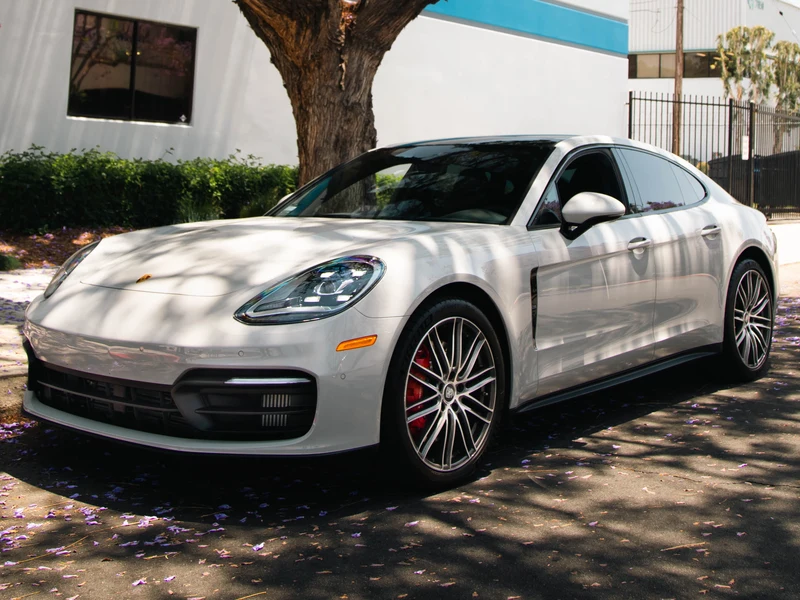
Window tint pricing, durability, and aesthetics all hinge on the same single number: VLT, or Visible Light Transmission. Pick the wrong shade and you either get a fix-it ticket from CHP or end up with rear glass so dark you cannot see backing out of a parking spot. This guide walks every shade from 5% to 85%, what each looks like in practice, and what most owners in Los Angeles actually choose.
Understanding VLT — what tint percentages mean
Visible Light Transmission is the percentage of visible light that passes through the glass and film combined. Higher VLT = more light passes = lighter tint. Lower VLT = darker tint.
- 85% VLT — almost no visible tint, very light film. Used as protective UV/heat film with no aesthetic change.
- 70% VLT — barely visible. Common as a legal-compliant front-window film in California.
- 50% VLT — light tint. Subtle privacy improvement, easy to see through both ways.
- 35% VLT — medium tint. Noticeably darker but still see-through.
- 20% VLT — dark tint. The most-popular rear shade in LA — privacy without total blackout.
- 15% VLT — very dark. Almost limo. Nearly opaque from outside in daylight.
- 5% VLT — limo tint. Effectively black from outside. Legal only on rear windows in California.
Important: VLT is the combined measurement of glass plus film. Factory glass already blocks 22–28% of light. Add a 70% film and the combined VLT lands closer to 50% — which is illegal on front windows in California. This is the most common reason DIY tint jobs end up ticketable. Full breakdown of California's tint laws here.
Every tint shade, explained
| VLT | Common name | Privacy | CA legal? | Best for |
|---|---|---|---|---|
| 85% | Clear film | None | Front + rear | UV/heat protection only, no visible change |
| 70% | Light | Minimal | Front + rear | Legal-compliant front windows, full ceramic line-up |
| 50% | Light medium | Slight | Rear only (front fails 70%) | Subtle privacy without blackout look |
| 35% | Medium | Moderate | Rear only | Daily-driver rear shade with good visibility |
| 20% | Dark | High | Rear only | Most-popular LA rear shade — dark and livable |
| 15% | Very dark | Very high | Rear only | Privacy-first builds, executive vehicles |
| 5% | Limo | Maximum | Rear only | Maximum privacy, near-blackout from outside |
85% (Clear)
- Privacy
- None
- CA legal
- Front + rear
70% (Light)
- Privacy
- Minimal
- CA legal
- Front + rear
50% (Light Medium)
- Privacy
- Slight
- CA legal
- Rear only
35% (Medium)
- Privacy
- Moderate
- CA legal
- Rear only
20% (Dark)
- Privacy
- High
- CA legal
- Rear only
15% (Very Dark)
- Privacy
- Very high
- CA legal
- Rear only
5% (Limo)
- Privacy
- Maximum
- CA legal
- Rear only
What each shade actually looks like
The numbers only mean so much until you see what each shade looks like in practice. Here is what we tell customers based on what they will actually experience day-to-day.
5% (limo)
From outside in daylight, glass reads as solid black — silhouettes inside are barely visible. From inside in daylight, the world looks like dusk. At night, looking out is significantly impaired — you will use side mirrors more aggressively. Best on chauffeured vehicles and back-row glass on family SUVs where rear passengers want full privacy.
15% (very dark)
From outside, almost as dark as 5% but with slightly more silhouette visible. Inside, daylight reads as overcast. Night driving is workable but headlights from behind feel dimmer in mirrors. Common on rear glass when 5% feels too aggressive.
20% (dark)
The LA sweet spot for rear glass. From outside, glass reads as dark and private without looking like a hearse. From inside, daylight is comfortably reduced, night vision is largely preserved. We install this shade more than any other on the rear side and back windows of LA passenger cars.
35% (medium)
Noticeably darker glass from outside but you can still see passenger silhouettes clearly. Inside, daylight is dimmed but reading text on a phone is easy. Night driving is unaffected. The right pick for owners who want darker-than-factory rear glass without a privacy-first statement.
50% (light medium)
From outside, looks like a slightly darker factory tint. Subtle. Inside, daylight is gently filtered. Often used on rear windows of luxury cars where the owner wants a clean uniform look without extreme darkness.
70% (legal front)
From outside, the glass looks essentially clear. Most viewers cannot tell the windows are tinted unless they are looking for it. Inside, the world looks normal — but UV and infrared heat are dramatically reduced if the film is ceramic. This is the legal-compliant front shade in California.
85% (clear)
Visually identical to bare factory glass. Used purely for UV protection (cancer prevention, paint preservation) and for windshield ceramic that blocks infrared heat without changing how the glass looks.
We keep sample plates of every shade in studio — drop by or send make/model for a quote.
California legality at a glance
Two rules cover most owners:
- Front side windows — combined VLT must exceed 70%. In practice that means installing 80–90% ceramic film on top of factory glass.
- Rear side windows + back window — no VLT limit on passenger vehicles. 5% limo is legal.
Windshield rules are separate: non-reflective tint allowed on the top 4 inches, plus full clear ceramic across the rest at 70%+ VLT. Reflective and metallic films are restricted regardless of VLT. Full California window tint laws — including LA enforcement patterns and fix-it ticket workflow — here.
What LA owners actually pick
Across hundreds of LA installs, three combinations cover roughly 80% of what we book. Here they are, by driver profile.
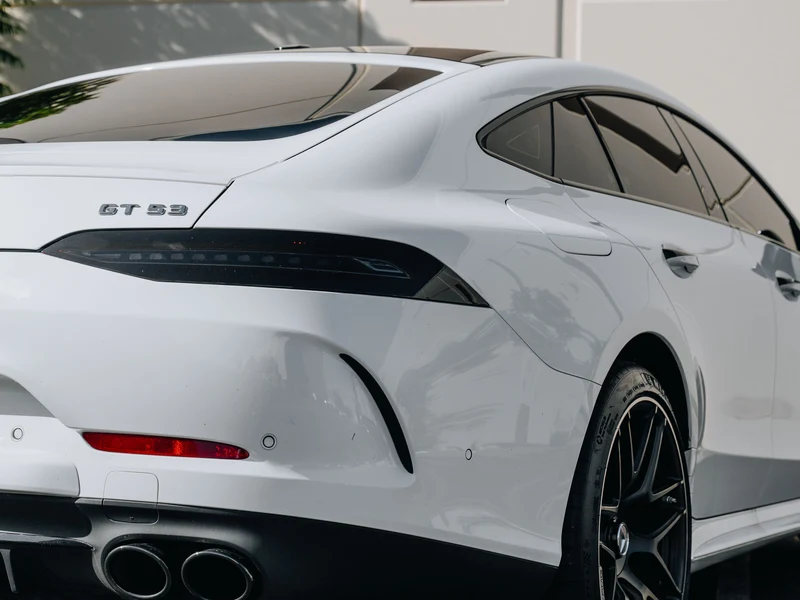
The standard LA combo (most-popular)
- Front sides: Ceramic 80% (legal, nearly invisible)
- Rear sides + back: Ceramic 20% (dark, privacy)
- Windshield: Clear ceramic 70%+ (heat rejection)
Roughly 60% of our LA installs land in this combo. Works for daily commuters, family cars, and most rideshare-driven vehicles.
The privacy-first combo (executive / SUV)
- Front sides: Ceramic 80% (legal)
- Rear sides + back: Ceramic 5–15% (limo / near-limo)
- Windshield: Clear ceramic 70%+
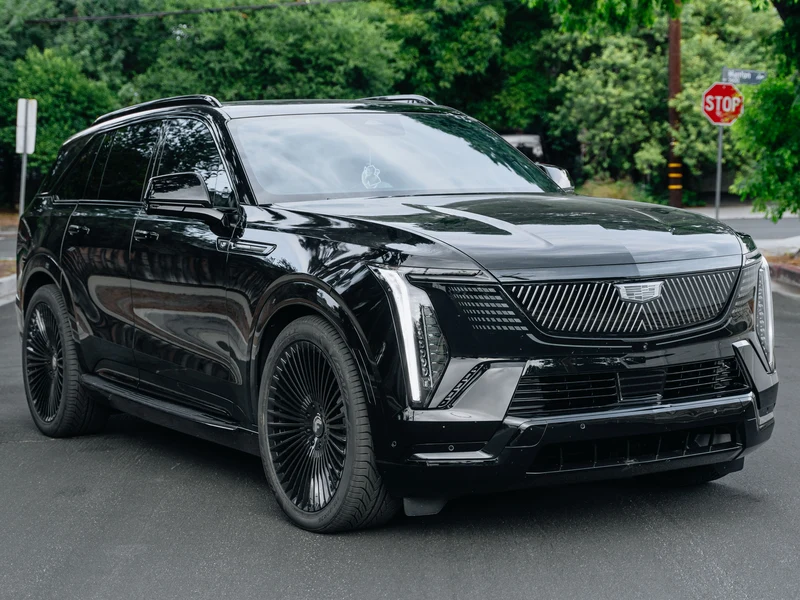
Common on Cadillac Escalade, Range Rover, Mercedes G-Wagon, and chauffeured executive sedans. Maximum rear privacy.
The subtle combo (luxury sedan, daylight visibility)
- Front sides: Ceramic 80% (legal)
- Rear sides + back: Ceramic 35% (medium darkness)
- Windshield: Clear ceramic 70%+
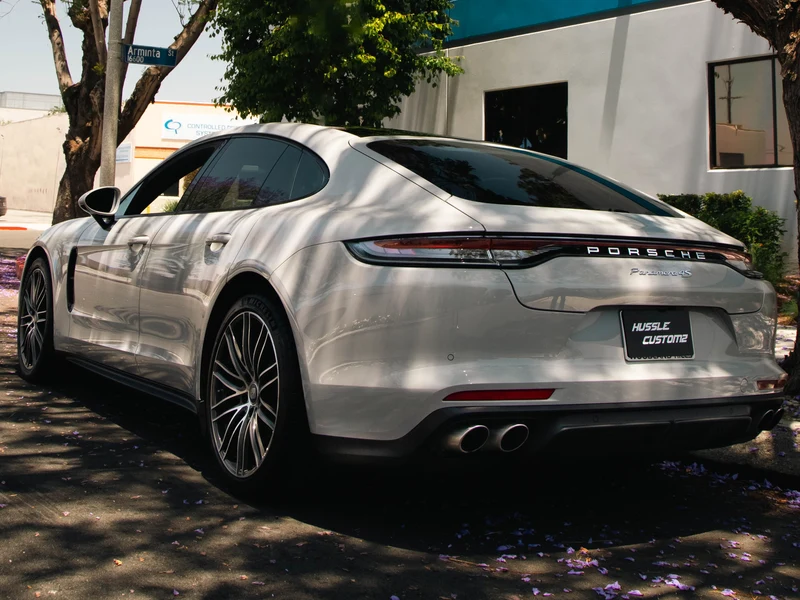
Owners who want darker-than-factory glass but still prioritize visibility — common on Porsche, Audi, BMW sedans driven by their owner rather than chauffeured.
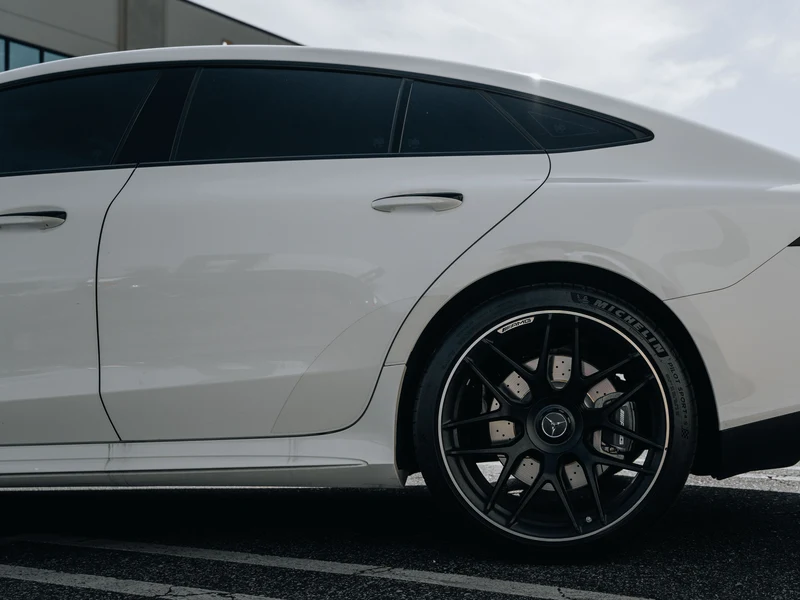
Film type matters more than shade
Two cars can have the same VLT shade and feel completely different inside. The variable that explains it is film chemistry, not darkness:
- Dyed film — cheapest. Blocks heat by being dark. Fades and turns purple in 2–4 years under LA sun.
- Hybrid (dyed + metalized) — mid-tier. Better heat rejection. Can interfere with phone signal and toll transponders due to metal layer.
- Carbon film — better heat rejection than dyed. Resists fading. Mid-price.
- Ceramic film — top-tier. Blocks 60–80% of infrared heat regardless of darkness. No fade, no metal interference, lifetime warranty from quality brands.
A dark dyed 20% will fade to brown by year four; a ceramic 20% installed at the same shade looks identical at year four and rejects 3× more infrared heat. Full ceramic-vs-regular comparison here — for LA's heat and UV, ceramic is the only film worth installing.
How to spot a bad install
Even a perfect shade choice falls flat if the install is sloppy. Five things we look at when customers come in asking us to fix another shop's work:
- Air bubbles or pockets. Visible bubbles within 30 days of install indicate rushed application or a contaminated work surface. Ceramic film bonds in 7–10 days; bubbles after that period mean trapped air or moisture that will not self-resolve.
- Lifted edges. Edges that lift along the seal line — especially around the top of the door window — usually mean the installer did not fully prep the rubber gasket area. Lifted edges catch dirt and accelerate film failure.
- Color shift between panels. If front and rear windows look different shades from outside in daylight, the installer mixed batches or used different film tiers. Pro shops install all glass from the same roll for color consistency.
- Light gaps at the top. Many shops cut film 1–2mm short to avoid touching the gasket — that gap is visible from outside as a thin clear strip and looks unfinished. Pro installs roll the film into the gasket cleanly.
- Purple fade after 1–2 years. Dyed film discoloration is a 100% reliable indicator that the shop installed entry-tier film regardless of what was promised at quote.
If you have a bad install — bubbles, lift, fade, or illegal-front shade — we remove and replace at our LA shop in 60–90 minutes. Removal alone runs $150–$300 depending on vehicle; full reinstall in legal ceramic typically $400–$700. Often the same visit if you book ahead. Window tint service page.
How to decide which shade is right
Three questions narrow it down for almost everyone:
1. How dark do you want the rear?
If you want maximum privacy / chauffeured-vehicle look → 5–15%. If you want dark and livable → 20%. If you want darker-than-factory but easy to see through at night → 35%.
2. Are you driving alone or being driven?
Self-driven cars benefit from lighter rear glass (35% over 5%) for night-driving safety. Chauffeured or rear-passenger-focused cars can go darker without compromising the driver experience.
3. How much do you drive at night?
Heavy night driving (Uber/Lyft, late-shift work, freeway commute) → consider 35% on rear glass. Lighter night driving → 20% works without issue.
Front sides are not a real choice in California — you go 80% ceramic to stay legal. The decision is on the rear.
One thing we tell every owner: the shade you wish you had picked when you see the car finished is almost always one shade darker than the one you originally requested. Most owners overshoot toward "subtle" at quote time and end up coming back in 6 months wanting darker rear glass. Worth thinking through honestly upfront.
Frequently asked questions
What does VLT mean on window tint?
VLT stands for Visible Light Transmission — the percentage of light that passes through the glass and film combined. Higher VLT = lighter tint (more light passes); lower VLT = darker tint. Standard shades range from 5% (limo) to 85% (nearly clear).
What is the most popular tint shade in Los Angeles?
For rear windows, 20% ceramic is by far the most-popular shade in LA — dark enough for privacy, livable for night driving. For front windows, California law requires 70%+ VLT, so most LA owners install 80% ceramic film on the front to stay legal while still rejecting heat and UV.
Is 20% tint legal in California?
20% tint is legal on rear side windows and the back window of passenger vehicles in California — there is no darkness limit on rear glass. 20% on front side windows is illegal because California requires combined VLT (glass + film) to exceed 70% on the front.
What's the difference between 5% and 20% tint?
5% is limo tint — near-blackout from outside in daylight. 20% is dark but readable — silhouettes inside are visible, and night driving is largely preserved. 20% is dramatically more practical for owner-driven vehicles; 5% is best for chauffeured cars or rear-row family SUVs.
Can I have different shades on different windows?
Yes — most LA installs use different shades front and rear specifically because California requires lighter front glass. The standard combo is 80% ceramic on the front (legal) and 20% on the rear (dark and private). All shades are made by the same manufacturer to ensure color consistency from outside.
How dark can I tint my back window in California?
As dark as you want on a passenger vehicle. California places no VLT restriction on the back window or rear side windows. 5% limo is legal. The only requirement: if rear visibility is significantly reduced, you must have side mirrors on both sides — every modern passenger vehicle does.
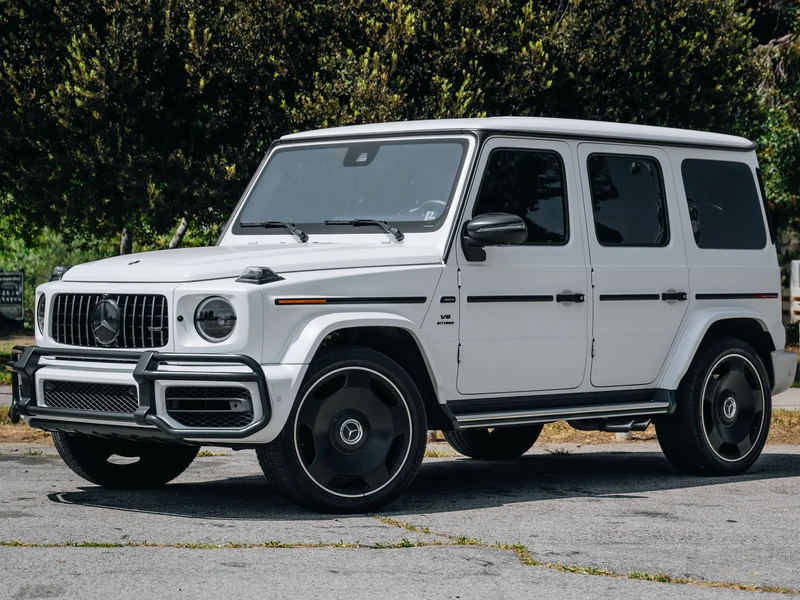
Sample shades in studio, ceramic across the board, legal-front guaranteed. Same-day quote.