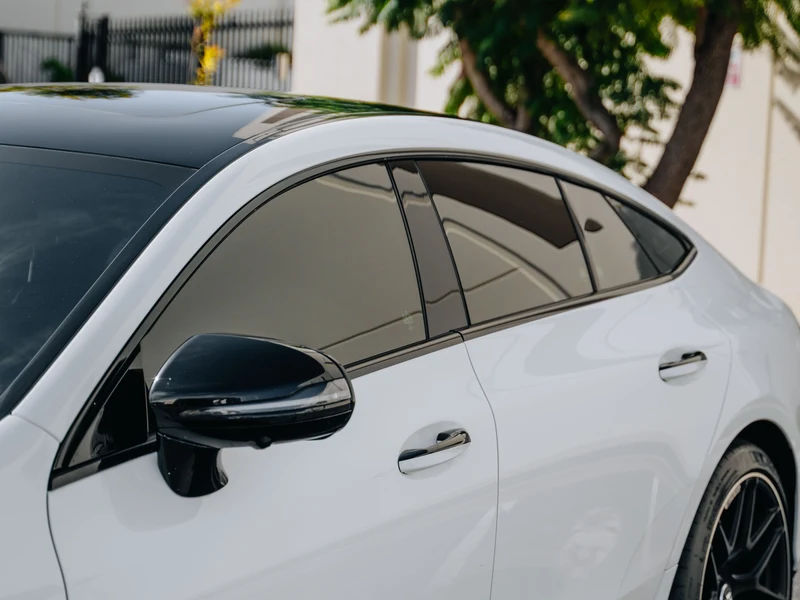
"Auto tint" in LA covers everything from a budget dyed-film install on a daily commuter to a STEK ceramic full-vehicle plus windshield combo on a Tesla Model Y. The price spread is real, the durability spread is bigger, and the legal compliance is non-negotiable. This guide walks what auto tint specifically means, what to install on each vehicle category, and how LA-specific factors (heat, UV, freeway commute, EV battery drain) change the recommendation.
What "auto tint" specifically means
"Auto tint" — sometimes "automotive window tint" or "car window tinting" — is the application of solar-control film to a vehicle's glass. It's distinct from residential tint (home windows) and commercial tint (office buildings, storefronts). The film chemistry overlaps but auto-grade film handles three things residential film does not have to: the curvature of car glass, freeway-speed wind pressure on edges, and the thermal cycling of a closed cabin going from 60°F overnight to 130°F by 1pm in summer.
Auto vs residential tint
Auto film is engineered for compound curves (rear windows are curved on virtually every modern vehicle), thinner gauges to fit defroster lines without distortion, and adhesive systems that survive the constant flex of doors slamming. Residential film is flat-glass only and uses different mounting solution. Cross-applying either is unprofessional and fails fast.
Auto vs commercial tint
Commercial tint is mostly safety film + solar control on building glass (storefronts, conference rooms). It's installed by glass contractors, not auto shops. Some LA shops advertise both — most automotive specialists (us included) focus only on autos.
The shorthand: auto tint = car/truck/SUV/EV glass. If a quote is mixing residential film into an auto job, walk.
Auto tint picks by vehicle type
Different vehicles need different specs. Tesla soft paint, large SUV cabin volume, truck rear-window geometry, and supercar rear-quarter angles each change the recommendation. Here's what we install most by category in our LA studio.
Compact / mid-size sedan (Civic, Camry, Tesla Model 3, BMW 3-Series, A4)
Standard four-window ceramic, 80% front + 20% rear, plus optional clear ceramic windshield. Sedan rear glass is small enough that 20% is not visually overwhelming; rear visibility through 20% is still adequate at night. Total install ~3 hours.
Mid-size SUV / crossover (Tesla Model Y, BMW X3, Lexus RX, Ford Explorer)
Six-window ceramic install (front sides + rear sides + rear quarter glass + back glass). 80% front + 20% rear standard. Some owners go 15% rear for more privacy — works on SUVs because of rearview camera reliance. Add 30 minutes vs sedan because of the extra two windows. For Tesla Model Y specifically, see our guide.
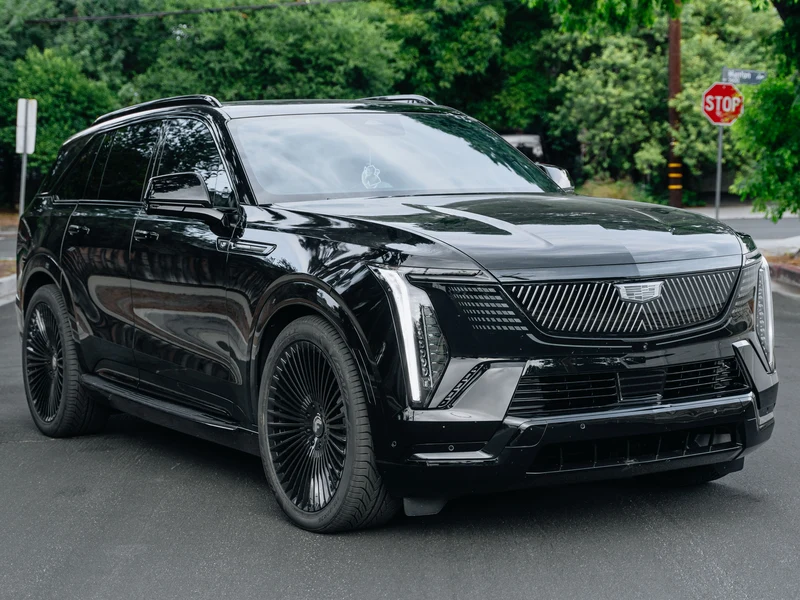
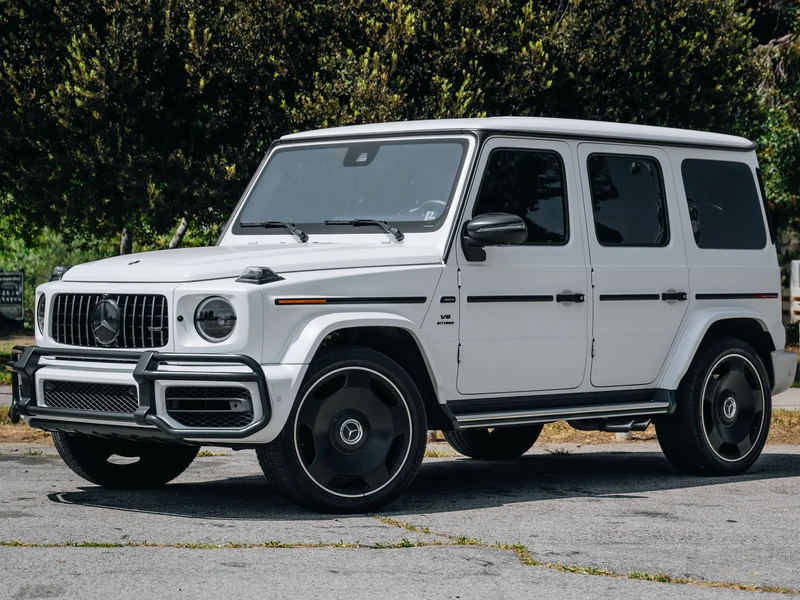
Large SUV (Cadillac Escalade, GLE, Range Rover, G63)
Eight-to-ten-window ceramic install. Privacy-first owners go 5–15% rear; standard install is 20% rear. Rear quarter glass on large SUVs gets its own plotter-cut pattern to fit cleanly. Install runs ~4 hours.
Truck (F-150, Tundra, Raptor)
Trucks have the simplest tint scope — front sides + rear sides + back glass. F-150 and Raptor often add the rear cab window separately if equipped with a sliding option. Standard install ~3 hours.
Tesla Cybertruck
Cybertruck is its own category. The windshield is one massive flat panel — and crucially, it is wider than standard ceramic film roll width (most auto-grade ceramic ships on 60-inch / 152 cm rolls). Two real options: splice two pieces of standard film with a seam down the middle (visible from inside, not acceptable on a quality install), or order specialty wide-format ceramic at premium material cost. We do the second — which is why clear ceramic windshield film on a Cybertruck costs more than on a comparable F-150. The install time is also longer because there's more flat area to squeegee without bubbles. Side and rear glass are standard truck pricing. The stainless body surround also needs careful film cutting to avoid catching the metal edge.
Tesla / EV (any model)
Same window count as gas equivalent, but EVs benefit dramatically from clear ceramic windshield film. Cabin AC drain is a major battery cost in LA summer — a clear ceramic windshield blocks 40–60% of infrared heat coming through the largest glass surface, reducing AC load and adding 2–5% effective range on hot days. We install windshield ceramic on roughly 80% of Tesla bookings for this reason.
Supercar / exotic (Lamborghini, Porsche, Ferrari)
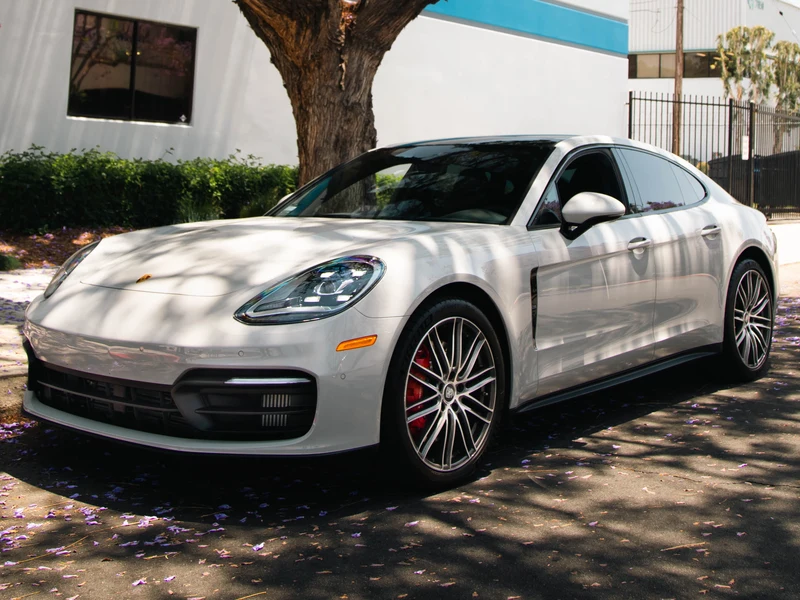
Rear-quarter window geometry on supercars is extreme — tight angles, bonded mounts, often privacy-tinted from factory. Auto tint on a supercar is usually front sides + windshield ceramic only, because the rear is already factory-dark or composite. ~2 hours install but extra prep on factory rubber gaskets.
Send year, make, model — same-day quote with windows included.
How auto tint pricing works in Los Angeles
The price depends on your car and the package. Choose your car at husslecustomz.com/tint/ to see the exact price of each package; if your car isn't listed, Jay, the owner, confirms the price. Five packages: two front windows, windshield, two front windows + windshield, all sides + rear, or full car (all sides + rear + windshield); a glass roof is an add-on to the full car package only. What drives the price: glass area and window count, curved glass, film type, and removal of old film.
| Vehicle | Windows |
|---|---|
| Compact sedan | 4 (or 5 with rear) |
| Mid-size sedan / coupe | 4–5 |
| Mid-size SUV / crossover | 6 |
| Large SUV | 8–10 |
| Truck (F-150, Tundra, Raptor) | 5–6 |
| Tesla Cybertruck | 5 |
| Supercar / exotic | 2–4 |
Compact sedan
- Windows
- 4
Mid-size sedan
- Windows
- 4–5
Mid-size SUV
- Windows
- 6
Large SUV
- Windows
- 8–10
Truck (F-150, Tundra)
- Windows
- 5–6
Tesla Cybertruck
- Windows
- 5
Supercar / exotic
- Windows
- 2–4
Our prices are for STEK ceramic with a lifetime film warranty. A rock-bottom quote for a full sedan is usually dyed budget film that fades and turns purple in 2–4 years under LA sun. Full window tint cost guide here.
LA-specific factors that change the recommendation
Generic auto-tint advice doesn't account for Los Angeles climate and driving patterns. Three factors push us toward specific recommendations for LA owners.
284 sunny days a year + 100°F+ summers
LA averages 284 sunny days. Summer cabin temperatures hit 130–150°F on a black-roofed sedan parked in direct sun for 4 hours. Ceramic tint at any darkness blocks 60–80% of infrared heat — dyed film at the same darkness blocks 18–25%. Over 5 years of LA summers, the comfort difference is enormous, and dyed film fades visibly within 3 years.
Freeway commute thermal load
The 405, 101, 110, and 10 average 30–60 minutes of stop-and-go in summer afternoons. Cabin sits in solar load with limited airflow even with AC on. Clear ceramic windshield — the largest glass surface and biggest heat source — is the single highest-impact upgrade for daily LA commuters. We install windshield ceramic on roughly 60% of LA tint bookings.
EV battery drain (Tesla, Rivian, Lucid)
Cabin AC pre-conditioning and active cooling on hot days is a measurable battery cost on EVs. A Tesla Model Y owner driving 12,000 miles/year in LA gains roughly 240–600 miles/year of effective range from full ceramic install + windshield film, just from reduced AC load. At LA charging cost (~$0.30/kWh), that's $20–$50/year of free range — and adds up to real numbers over a 10-year ceramic lifespan.
Dyed film vs ceramic over 8 years: dyed film costs less up front but gets replaced 2×. Ceramic costs more up front and lasts the full 8 years. Plus ceramic blocks 3× more heat throughout. Ceramic is cheaper AND better over the ownership window. Full ceramic vs regular breakdown here.
The LA combo most auto owners pick
After hundreds of LA installs, three combinations cover the vast majority of bookings.
Standard combo (most common, ~60% of installs)
- Front sides: 80% ceramic (legal — combined VLT >70% with factory glass)
- Rear sides + back: 20% ceramic (dark, livable, night-driving safe)
- Windshield: Clear ceramic 70%+ (heat rejection, invisible)
Works for daily commuters, family cars, executive sedans. This is the full car package — choose your car at husslecustomz.com/tint/ to see its exact price.
Privacy-first combo (~20% of installs)
- Front sides: 80% ceramic (legal)
- Rear sides + back: 5–15% ceramic (limo / near-limo)
- Windshield: Clear ceramic 70%+
Cadillac Escalade, Range Rover, G-Wagon, executive SUVs, chauffeured vehicles. Maximum rear privacy.
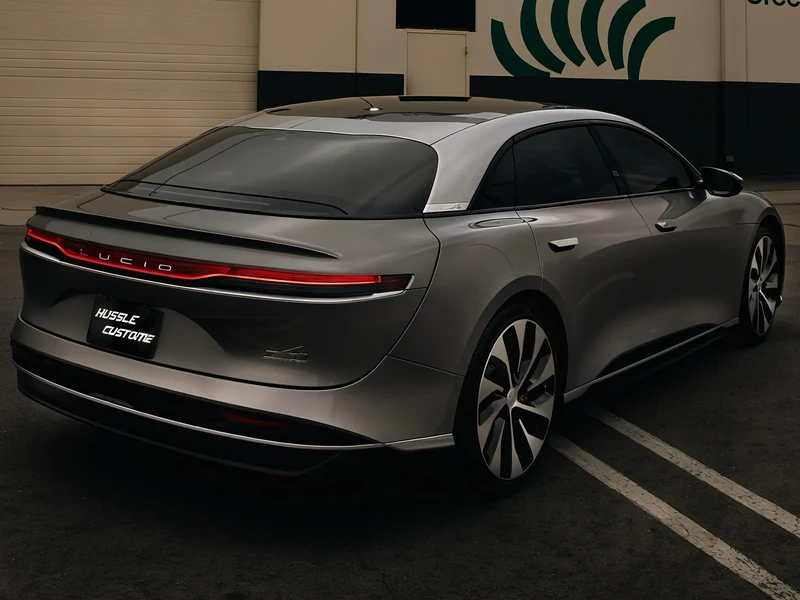
EV-optimized combo (~80% of Tesla / Rivian / Lucid bookings)
- Front sides: 80% ceramic
- Rear sides + back: 20% ceramic
- Windshield: Clear ceramic 70%+ (essential for battery range)
Same combo as standard but windshield ceramic is non-optional for the battery savings. Tesla owners who skip windshield ceramic regret it by their second LA summer.
California legal — short version
Two rules cover most LA auto tint situations:
- Front side windows: combined VLT (factory glass + film) must exceed 70%. Practically: install 80–90% ceramic.
- Rear side windows + back window: any darkness allowed on passenger vehicles. 5% limo legal.
- Windshield: non-reflective tint allowed on top 4 inches; full clear ceramic at 70%+ VLT allowed across the rest.
Reflective and metalized films are restricted regardless of VLT. A tint ticket in CA carries a $25 base fine plus court fees ($100–$200 real total) plus removal/reinstall cost — more than the price of installing legal ceramic in the first place. Full California window tint laws — including LAPD vs CHP enforcement patterns — here.
What we install on autos
At Hussle we install STEK ceramic window film on every auto job. STEK gives us four things that matter for the LA auto market:
- Workability on Tesla and German curves. Tesla rear-quarter glass and Mercedes coupé profiles need film that lays cleanly on tight curves without stress marks.
- Hydrophobic top coat. Water beads off STEK noticeably better than competitors — less squeegee work after rain or wash.
- A written film warranty. Ours on ceramic tint is lifetime.
- Color stability across the line. All STEK shades match each other from the same roll — no color shift between front and rear when installed at different times.
Other premium ceramic brands — 3M Crystalline, XPEL Prime XR Plus, Llumar AIR, FormulaOne Stratos — are all legitimate. Full brand comparison with specs here. We just prefer STEK on the cars we work on most.
How long an auto tint install takes
Same-day install for almost every vehicle.
- Compact sedan: 2.5–3 hours, drop-off morning, pickup afternoon.
- Mid-size sedan / SUV: 3–4 hours, same-day.
- Large SUV / truck: 4–5 hours, same-day.
- Tesla Cybertruck: 4–5 hours (flat glass simplifies, stainless edges add 30 min).
- Add windshield ceramic: +1–1.5 hours.
- Add tint removal of old film first: +1–3 hours depending on age and quality of old film.
Cure time on auto tint is shorter than PPF — film bonds in 7 days, fully cures in 30. First-week protocol: don't roll windows down for 48 hours, hand-wash only for 30 days, no automatic car washes for 90 days.
The pattern we see at year three. Customers who installed dyed film at a budget LA shop in 2022–2023 are coming in for replacement — purple-fading visible by year two, full color shift by year three. Customers who installed ceramic in 2019–2020 are still on the original film. Same shop, same labor — different product, dramatically different lifetime cost. Worth doing right the first time.
Frequently asked questions
How much does auto tint cost in Los Angeles?
The price depends on your car and the package. Choose your car at husslecustomz.com/tint/ to see the exact price of each package; if your car isn't listed, Jay, the owner, confirms the price. We install STEK ceramic with a lifetime film warranty. A rock-bottom quote for a full sedan is usually budget dyed film that fades and turns purple in 2–4 years.
What's the best auto tint for Tesla in LA?
For any Tesla in LA we recommend ceramic 80% legal-front + 20% rear all six windows + clear ceramic windshield. The windshield ceramic is the killer feature for Tesla — reduces AC load enough to add 2–5% effective range in summer. See our Tesla tint guide for model-specific details.
Is 20% tint legal on autos in California?
20% is legal on rear side windows and the back window of any passenger vehicle in California — there's no darkness limit on rear glass. 20% is illegal on front side windows because California requires combined VLT (glass + film) to exceed 70% on the front. The legal LA combo is 80% ceramic front + 20% rear.
How long does auto tint take to install?
Same-day for almost every vehicle: compact sedan 2.5–3h, mid-size sedan/SUV 3–4h, large SUV/truck 4–5h. Add 1–1.5h for clear ceramic windshield. Add 1–3h if old film needs removal first. Drop off morning, pick up that afternoon. After install, don't roll windows down for 48 hours and hand-wash only for the first 30 days.
What's the difference between auto tint and residential tint?
Auto tint is engineered for car glass — compound curves, defroster lines, freeway-speed wind pressure on edges, thermal cycling of a closed cabin going 60°F to 130°F daily. Residential tint is flat-glass only and uses different mounting solution. Cross-applying either is unprofessional and fails fast. Always book auto tint at an automotive specialist, not a glass contractor.
Can I get auto tint same-day in LA?
Yes for almost every vehicle. Most LA shops, including ours, schedule auto tint same-day or next-day. Drop off morning, pick up that afternoon for sedans and mid-size SUVs. Larger vehicles or builds with windshield ceramic added might extend to next-morning pickup if dropped off late in the day.
Does ceramic auto tint really save EV battery in LA?
Yes, measurably. Cabin AC pre-conditioning and active cooling on hot days is a real battery cost on EVs. A Tesla Model Y owner driving 12,000 miles/year in LA gains roughly 240–600 miles/year of effective range from full ceramic install + clear ceramic windshield, from reduced AC load. At LA charging cost (~$0.30/kWh) that's $20–$50/year of free range — and adds up across the 10-year ceramic lifespan.
STEK ceramic with a lifetime film warranty. Same-day install. Sample shades in studio.