Fiber optic headliner installation. Custom star density, shooting star effect, any vehicle. The interior detail that stops people mid-sentence.
The headliner is removed from the vehicle and taken to the workbench. Hundreds of individual fiber optic strands are hand-routed through the headliner material — each one placed to create a natural, randomized star pattern.
The strands are connected to an LED light engine that controls brightness and the shooting star effect. The headliner is then reinstalled and the controller is wired into the vehicle's power system.
The result integrates with the original headliner material. From the outside, you'd never know it was modified — until the lights go off.
Factory Rolls-Royce charges $12,000+.
We do the same work for less.
Fixed white stars, natural randomized density. Adjustable brightness via controller. Works on any headliner — the clean, classic version of the installation.
Everything in Standard plus animated shooting star strands. Multiple effects and timing options. Controlled through a dedicated module or integrated into the vehicle's system.
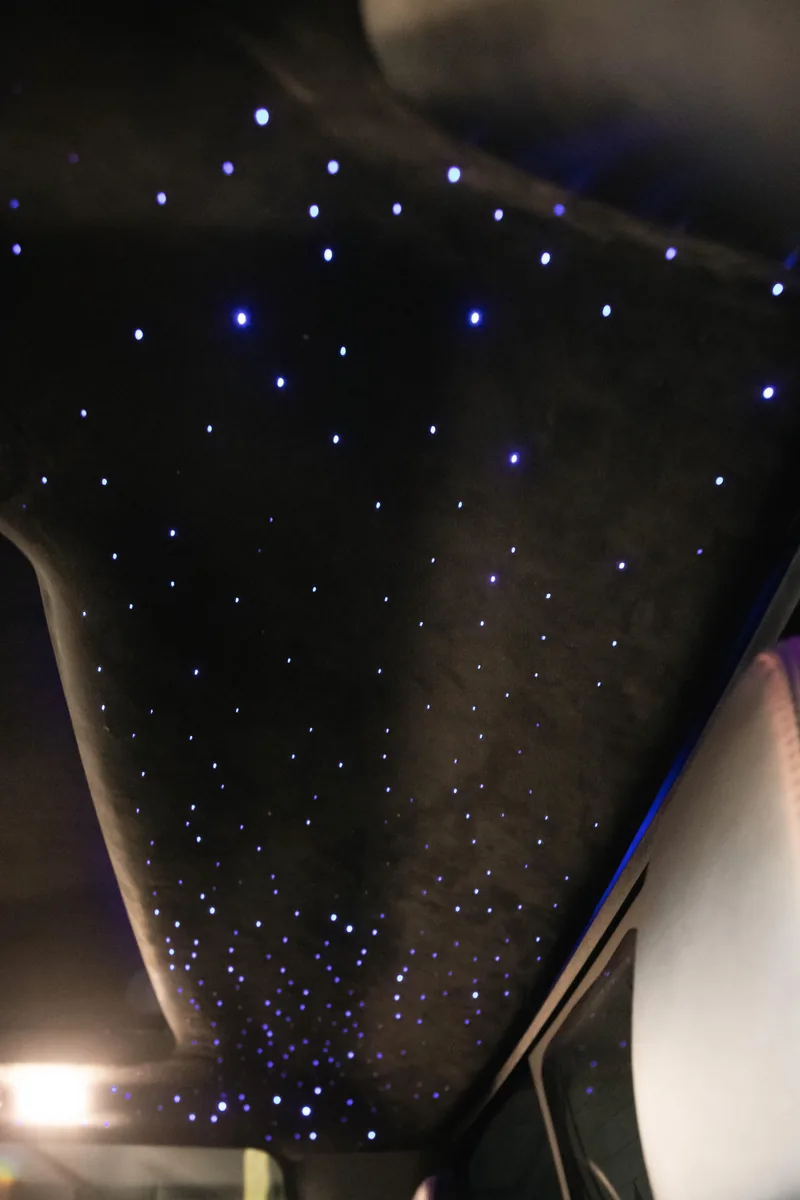
A starlight headliner is a recreation of a night sky inside the cabin of a car. Hundreds — sometimes thousands — of individual fiber optic strands are hand-routed through the existing headliner material. From inside the car, with the engine off, you see a perfect black headliner. Turn the light engine on and the same headliner becomes a star field.
The option became famous because Rolls Royce introduced it as a bespoke commission for the Phantom. Today it’s a catalog option across the Rolls Royce lineup at a starting price near $12,000, climbing into six figures for custom constellations. The technology itself isn’t exclusive — it’s a process. We do the same install for any vehicle with a removable headliner, at a fraction of the factory price.
If you want to read the full breakdown of how Rolls Royce charges what they do and why aftermarket installs deliver the same effect, see our Rolls Royce Starlight Headliner guide.
Any vehicle with a removable headliner
can have a starlight ceiling.
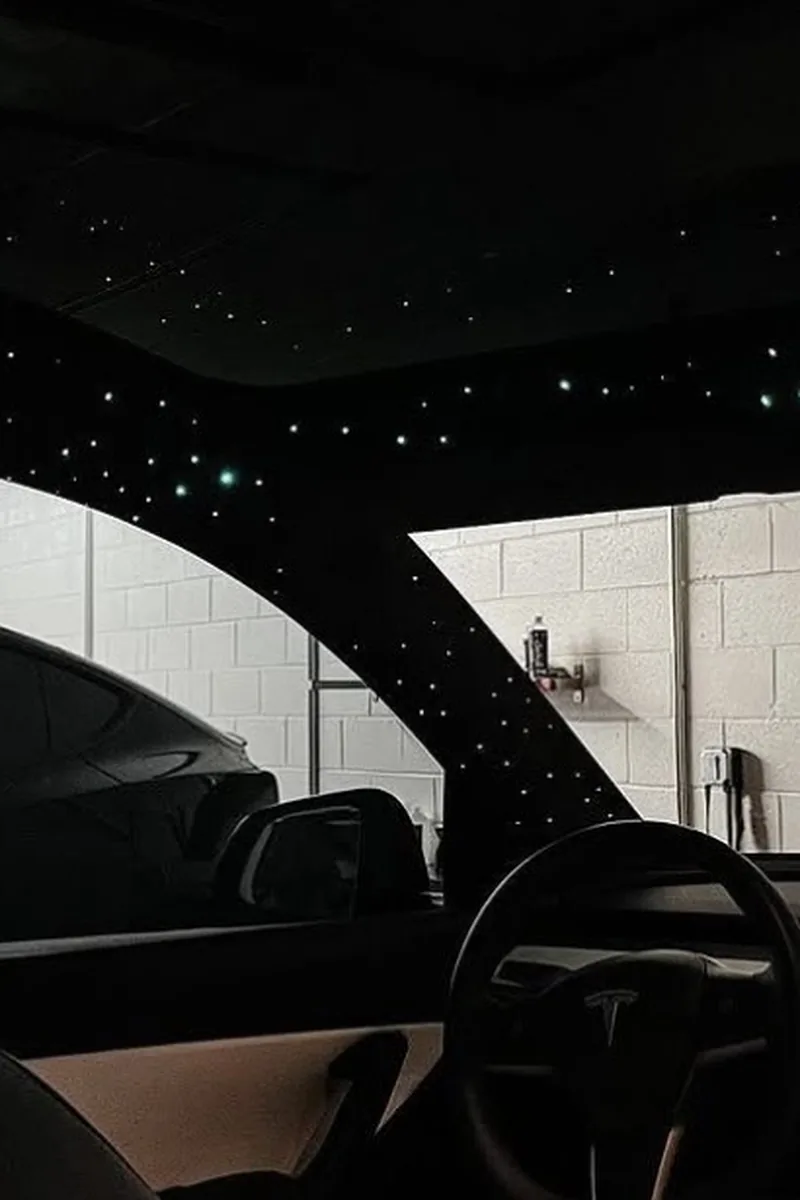
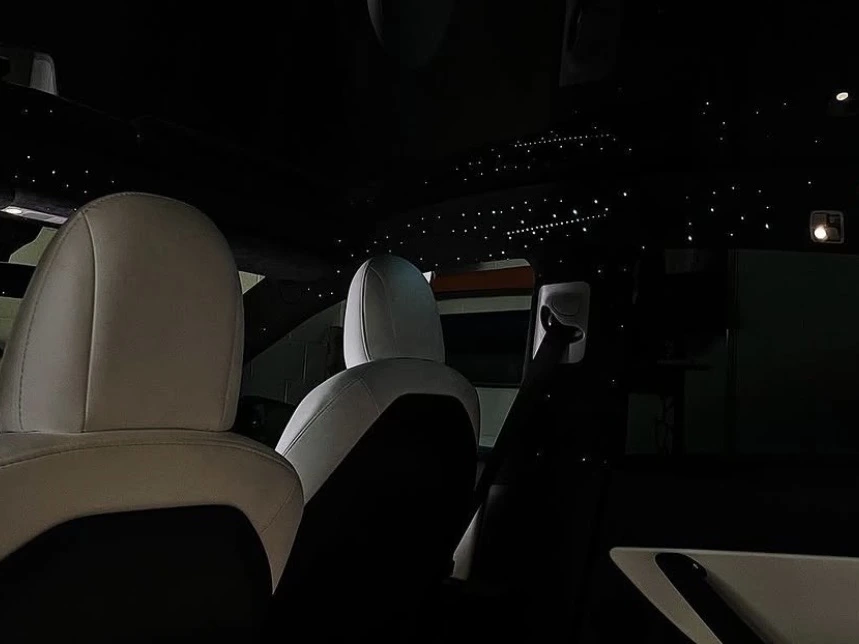
Tesla starlight installs are one of the most-requested. We’ve installed across the entire Tesla lineup — the panoramic roof models require perimeter-only fiber placement; the standard headliners get full coverage.
Mercedes S-Class, Maybach, BMW 7 Series and X7, Audi A8 and Q7, Range Rover Autobiography. Aftermarket installs deliver custom layouts that exceed what the factory options allow.
Owners who bought a used Rolls without the factory Starlight option add the headliner aftermarket. Same fiber, same LED engine, same visual effect — without the bespoke commission pricing.
There are two main configurations for a starlight headliner. Both are available aftermarket, both are available from the Rolls Royce factory.
Standard star pattern uses fixed white or warm-white fiber strands creating a natural, randomized night sky. Brightness is adjustable. This is the most-requested configuration because it produces the iconic visual effect without animated complexity. A typical install uses between 600 and 1,200 fiber strands depending on customer preference and vehicle size.
Shooting star upgrade adds a motorized fiber rotation module to the LED engine plus a separate set of fibers that produce intermittent meteor-sweep effects across the ceiling. The timing is random, the rate is adjustable. This is the signature Rolls Royce feature most customers associate with the option. Adds material cost and modest install time.
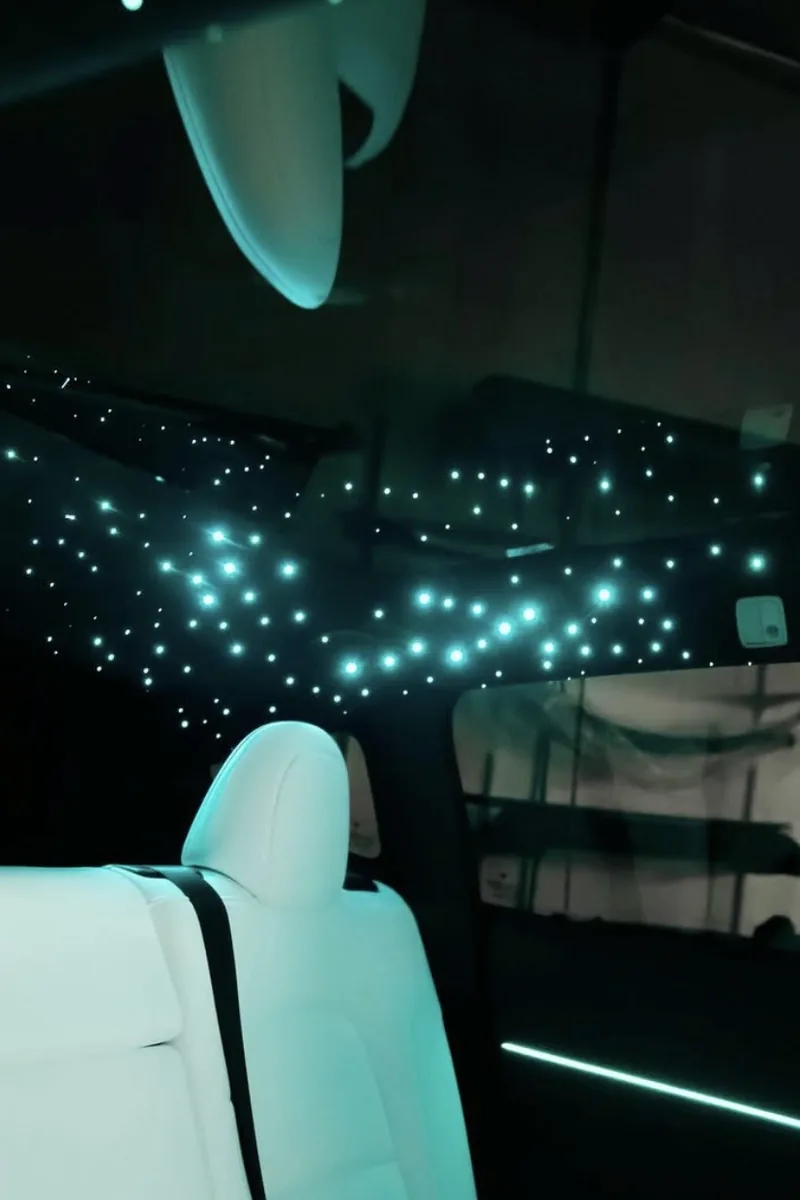
Color options run from traditional warm white (the most period-accurate) through cool white to full RGB. RGB is a polarizing choice — most luxury customers stay with warm white because it best matches the night-sky aesthetic. Custom constellations (a specific star pattern mapped to a date) are available with advance planning.
A standard star pattern install takes three to five business days at the shop. Higher star counts, shooting star effects, and custom constellation patterns extend the timeline. We plan the build around your calendar so the vehicle is in the shop only for the days actually required.
Day one is headliner removal. The existing headliner is uninstalled from the vehicle and taken to the workbench. This is the longest single labor block on most cars — the trim around the headliner is delicate and the original install often uses adhesive that has to be carefully released.
Days two through four are fiber routing. Each strand is hand-pushed through the headliner material from the back side, one at a time. Each fiber is then trimmed flush with the visible surface. For a 1,200-strand install, this is roughly 20 hours of bench work.
The final day is reinstall, wiring, and testing. The fiber bundles connect to the LED engine, the engine wires into the vehicle’s power system, and every fiber is verified to light correctly before the car leaves the shop.
Online retailers sell DIY fiber optic headliner kits in the $200 to $600 range. They include a small LED engine, a coil of fiber strands, and instructions. They’re cheaper than a professional install for a reason — they don’t produce the Rolls Royce visual effect.
DIY kits include 200 to 400 strands. A proper night-sky effect requires 600 to 1,200, and the Rolls Royce factory option often exceeds 1,500. DIY fiber is cheaper plastic with shorter usable life and dimmer output. DIY instructions assume you can push fibers through the headliner while it’s still in the car — this produces uneven star placement and almost always damages the headliner material at the trim edges. DIY LED engines flicker, run hot, or fail within a year.
A DIY kit installed in your driveway produces a sparse, uneven pattern with visible damage at the headliner edges, and the system typically needs replacement within two to three years. Professional installs last the life of the vehicle.
The aftermarket starlight market in LA has expanded with the popularity of the Rolls Royce option. Most shops that advertise the install don’t do it correctly. Here’s how to filter.
Ask how many fiber strands they install per project. The correct answer is “depends on the vehicle and customer preference, typically 600 to 1,500.” Any shop that quotes a single fixed number is using a kit, not building a custom install. Ask whether they remove the headliner for the install — yes is the only correct answer. Ask what LED engine they use; the shop should name a specific commercial-grade brand, not “generic LED kit.”
Ask to see a finished install in person. The starlight visual is hard to capture on camera, so video and photos aren’t enough — a shop should be willing to show a current build or arrange a viewing of past work. Confirm the warranty terms in writing before the deposit.
At our shop in Van Nuys, every starlight install is built to spec for the specific vehicle, with the headliner fully removed, commercial-grade LED engines, premium fiber, optional shooting star modules, and a full workmanship warranty.
Most starlight customers are doing other work on the same vehicle. The starlight install is the right time to bundle these because the headliner removal opens access to the rest of the interior, and the multi-day timeline overlaps efficiently with other services.
Common pairings: starlight plus interior ambient lighting on the same LED controller for unified cabin lighting; starlight plus ceramic window tint to darken the cabin so the starlight effect reads even in daylight; starlight plus exterior Paint Protection Film or vinyl wrap as a full build; starlight plus ceramic coating for protected paint plus customized interior in one visit.
Bundled service pricing is more efficient than scheduling separate appointments — the car is already at the shop, prep work overlaps, and the total time is shorter than the sum of standalone installs.
Call us to schedule. We'll confirm compatibility with your vehicle and give you a timeline.