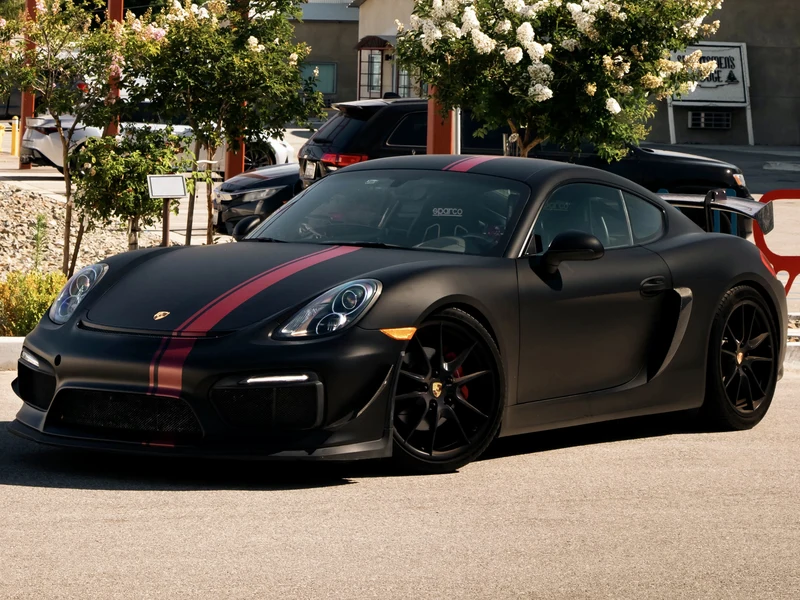
What hood stripes are
Hood stripes — also called Le Mans stripes or twin hood stripes — are two parallel vinyl stripes running front-to-back across the hood of the car. They typically stop at the windshield (sometimes continuing under the wipers into the cowl). Width usually sits between 8 and 12 inches per stripe with a gap of roughly the same width between them. The exact dimensions are scaled to the hood and the vehicle proportions.
The Le Mans stripe pattern originated in mid-twentieth-century endurance racing when teams needed to identify cars at a distance on long straights. The American adoption is most associated with Carroll Shelby's GT350 and Ford's Le Mans GT40 program. By the 1980s the twin hood stripe had become shorthand for "fast car" across the entire muscle and sports car segment, and it has stayed in that role ever since.
What rally stripes are
Rally stripes — also called over-the-top stripes — are a continuous stripe layout that runs from the front bumper, across the hood, over the roof, and down the rear deck. Some configurations include a single center stripe; the more common setup uses twin parallel stripes that maintain the same width and spacing from front to back. The stripes follow the centerline of the vehicle and turn the car into a single visual axis from front to rear.
The term "rally stripes" comes from European motorsport, particularly the Lancia and Subaru rally heritage. In American muscle car culture the same layout is often called "GT500 stripes" after the iconic Mustang variant. Either way, the visual statement is dramatic — rally stripes commit the entire vehicle to the racing aesthetic.
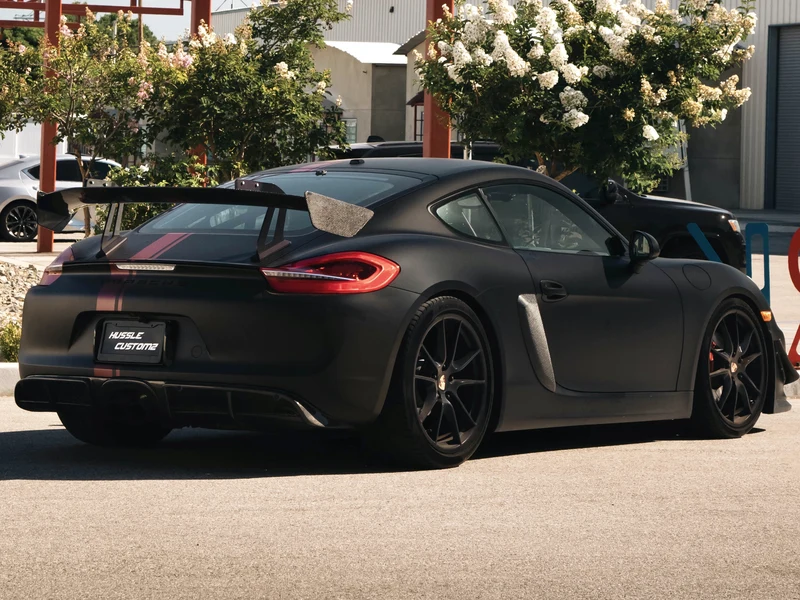
Head-to-head comparison
Here is the side-by-side breakdown across the dimensions that actually matter when choosing a stripe layout for your car.
| Dimension | Hood stripes | Rally stripes |
|---|---|---|
| Visual impact | Restrained, classic | Bold, committed |
| Install time | 3–5 hours | 6–10 hours |
| Material used | Single hood panel | Hood + roof + rear deck (+ bumper) |
| Panel seams crossed | None (single panel) | 3 to 5 seams |
| Cost factor | Base price | ~2x base price |
| Removal effort | Single panel | Multi-panel |
| Vehicle fit | Almost any car | Coupes / sedans best, harder on SUVs and trucks |
| Style references | Shelby GT350, classic Mustang, Camaro SS | Shelby GT500, Lancia rally, Subaru WRX rally |
When hood stripes are the right call
Hood stripes are the right choice when you want stripe character without committing the whole car to the racing aesthetic. They work especially well in these scenarios.
- Daily-driven sports cars — you want the look without the every-day visual intensity of a full rally stripe layout
- Restomod or restoration builds — classic muscle car projects where the original spec used Le Mans pattern stripes
- Cars with strong existing body lines — if the body design already does a lot of visual work, hood stripes add accent without competing
- Resale-conscious owners — hood stripes are easier to remove without affecting the rest of the body, so resale flexibility is higher
- First-time stripe customers — if you are not certain about stripes long-term, hood stripes are a lower-commitment way to try the look
- Cars with intricate roof or rear deck designs — if the roof has a sunroof, panoramic glass, integrated antenna, or aerodynamic features, rally stripes can struggle to lay correctly across those interruptions
When rally stripes are the right call
Rally stripes are the right choice when you want the car to read as a single committed build, not a stock vehicle with a hood accent.
- Show cars and weekend cruisers — the maximum visual statement is fine when the car is not the daily commuter
- Modified builds with widebody kits, exhaust, wheel changes — the existing modifications already commit the car, rally stripes complete the look
- Heritage builds that reference rally or GT500 history — if the car is specifically a tribute to a rally-stripe original, hood stripes alone leave the reference incomplete
- Cars with clean, uninterrupted roof and rear deck — flat or simple-curve roof and trunk surfaces let the stripe run cleanly without interruption
- Cars with strong horizontal lines that need a vertical accent — the over-the-top stripe creates a vertical axis that breaks up wide, long body shapes
- Build owners who plan to keep the car long-term — the commitment is real (full-vehicle install), so it suits owners who are not selling next year
Cost difference
The price gap between hood and rally stripes is meaningful. Material cost roughly doubles (more vinyl needed) and labor scales up because the installer is working across multiple panels with panel-seam alignment.
- Material — rally stripes use roughly 2 to 2.5x the vinyl footage of a hood stripe layout. On a coupe that translates to a noticeable cost line item, on a full-size SUV it is significant
- Install labor — the hood-only install can be completed in a half day. Rally stripes require a full day at minimum, sometimes 1.5 days for complex layouts with stripe-over-trim work
- Surface preparation — more panels touched means more prep area: clay bar, isopropyl wipe, masking and unmasking around trim and emblems
- Alignment passes — a hood stripe has to align with itself. A rally stripe has to maintain centerline and parallel spacing across the hood-to-windshield gap, windshield-to-roof gap, and roof-to-rear-deck gap. Each transition requires alignment passes that add labor
Rule of thumb: rally stripes typically run roughly two times the hood-only install cost on the same vehicle. Specialty films (color-shift, chrome, carbon fiber pattern) increase both lines proportionally.
Vehicle-by-vehicle fit
Both layouts work on most vehicles, but the visual fit varies. Here is how it shakes out by body style.
Muscle cars (Mustang, Camaro, Charger, Challenger)
Both layouts work well. Hood stripes are the classic, restrained option. Rally stripes are the maximum statement. The muscle car form factor was designed around stripes in many cases, so neither layout looks out of place. Choose based on personal taste and whether the car has other visual modifications competing for attention.
Sports cars (Porsche, Corvette, BMW M, GT-spec)
Hood stripes lean classic and restrained. Rally stripes can read as aggressive on otherwise minimal European sports car bodies, which some owners want and others find too loud. Sports cars with strong existing body lines often look best with hood stripes that accent rather than dominate.
Sedans (M3, AMG, Type R, sports sedans)
Hood stripes work cleanly. Rally stripes are unusual on sedans because the over-the-top layout reads as race-spec on a four-door silhouette. Possible, but less common — usually reserved for specific tribute builds (Subaru WRX rally homage, Lancia tribute, etc.).
SUVs and trucks (Ford Raptor, F-150, Tahoe, Cybertruck)
Hood stripes alone can look undersized because the hood is so large relative to the body. Rally stripes scale up better but require careful alignment across the long roof. The most popular truck/SUV stripe combination is rally stripes plus rocker side stripes — the side stripes balance the vertical mass of the body.
Exotics (Lamborghini, Ferrari, McLaren)
Hood stripes are unusual on exotics — the body design is already so distinctive that a hood accent can read as decorative rather than purposeful. Rally stripes on exotics can work spectacularly when the car is being built for the maximum visual statement (look at modified Huracan and 720S builds). On stock exotics rally stripes are a polarizing choice.
JDM tuner builds (R34 GTR, Supra, RX-7, S2000)
Both layouts have strong precedent in JDM tuning culture. Rally stripes lean toward the time attack / circuit aesthetic. Hood stripes lean toward street build classic. Choose based on which subculture the build references.
Color and finish choices
Both stripe layouts use the same vinyl options. The finish choice affects the visual impact more on rally stripes (because they cover more area).
- Gloss vinyl — classic, high-contrast, works on either layout. The default choice for most stripe installs
- Matte vinyl — subdued, looks modern and aggressive. Pairs especially well with darker base colors
- Satin vinyl — the middle ground between gloss and matte, refined visual character. Often the best choice for high-end builds where the stripe should look intentional but not flashy
- Chrome or specialty finishes — high-impact on hood stripes, almost overwhelming on rally stripes unless the base color is deliberately low-key
- Color-shift or iridescent vinyl — lighting-dependent finish that looks different at different angles. Works on either layout but particularly striking on rally stripes where the larger area gives more chance to read the color shift
Combining stripes with other modifications
Most customers ordering racing stripes are also doing other vehicle work. The combinations affect which stripe layout fits best.
- Stripes + Paint Protection Film — the stripes go on top of the PPF, so when the stripes are removed years later the paint underneath is original. This is the highest-quality way to do either stripe layout
- Stripes + full vinyl wrap — the wrap goes first, the stripes apply on top. This is the only way to get a non-paint base color with stripes (matte black wrap with gloss white stripes, for example)
- Stripes + chrome delete — coordinated dark/contrasting accents work especially well with rally stripes on the same vehicle
- Stripes + ceramic tint — stripes are an exterior accent, tint is an interior/glass accent. They complement each other without competing
- Stripes + painted wheels or rims — color-coordinated wheels and stripes create a unified visual theme
The "stripes over PPF" combo is the right way to do stripes long-term. If you are planning to keep the car for 5+ years and you might want to change the stripe layout (or remove stripes entirely), PPF underneath protects the paint and lets you swap stripes without paint correction. Worth the extra cost on premium vehicles.
Common mistakes when choosing
The choice between hood and rally stripes is mostly aesthetic, but a few decision errors come up often enough to flag.
Choosing rally stripes for the wrong reasons
Some customers pick rally stripes because they think "more is better." Sometimes more is better; often it is just more. If you cannot articulate what the rally stripes are doing for the car beyond "they look cool," consider hood stripes first — you can always upgrade to rally stripes in a year if you want more. Going from rally to hood is harder and may require paint correction.
Choosing hood stripes when the car already has too many accents
If the car has aggressive aero, painted brake calipers, custom wheels, exhaust visibility, chrome delete, and emblem accents, adding hood stripes can push the visual past the point of cohesion. In that case skip stripes entirely or commit to rally stripes that unify the look.
Picking color without considering the base body color
The contrast between stripe and body color determines visibility. Black stripes on dark gray are subtle (sometimes intentionally so, sometimes by mistake). White stripes on black are maximum contrast. Choose stripe color in relation to body color, not in isolation.
Going DIY on rally stripes
DIY hood stripe kits are a marginal idea (kits exist, most installs end badly, but the panel is small). DIY rally stripes are almost always a failure — the panel transitions, the centerline alignment, and the labor involved make it a professional-only install. If budget is the constraint, do hood stripes professionally rather than rally stripes DIY.
How to decide
If you are stuck on the choice, here is the simple decision framework.
- Is the car a daily driver, weekend car, or show car? Daily → lean hood. Weekend or show → either works.
- Does the car have other major visual modifications already? Yes → lean rally for unification. No → lean hood for accent.
- Are you planning to sell within 3 years? Yes → lean hood (easier removal, broader resale appeal). No → either works.
- Is the roof flat or simple-curve, with no sunroof or panoramic glass? Yes → rally works cleanly. No → lean hood.
- Is the base color light or dark? Either works for both layouts — this is purely contrast choice, not layout choice.
If you score 3 or more "lean hood" answers, hood stripes are the right call. If you score 3 or more "lean rally" answers, commit to rally. If it splits down the middle, default to hood stripes — lower commitment, lower cost, easier to upgrade later.
Final word
Hood stripes and rally stripes are not better or worse than each other — they are different commitments. Hood stripes are the classic, restrained choice that suits most cars and most owners. Rally stripes are the maximum statement that works when the rest of the build supports it. The wrong layout on the right car ages badly; the right layout on any car looks intentional for years.
If you are ready to add either to your build in Los Angeles — we install both at our shop in Van Nuys. Premium cast vinyl, custom-cut on our plotter, paint-safe install, one-day turnaround for hood, one to two days for rally. Get a quote and we will spec the right layout for your specific vehicle.
Premium vinyl, custom-cut, installed in one day. Get a vehicle-specific quote.