
Same look, different function
Gloss black vinyl wrap and gloss black PPF can look identical on a finished car. The difference isn't in the appearance — it's in what the film is doing underneath that appearance.
Vinyl wrap is a decorative film. It changes the color, protects against minor surface scratches, and is fully reversible. It does not protect against rock chips or significant impacts.
Paint protection film is a structural film — typically 8 mils thick versus vinyl's 3-4 mils. It absorbs rock chips, scuffs, and abrasions. In a gloss black finish, it does all of that while presenting the same visual result as a vinyl wrap.
Where the cost difference comes from
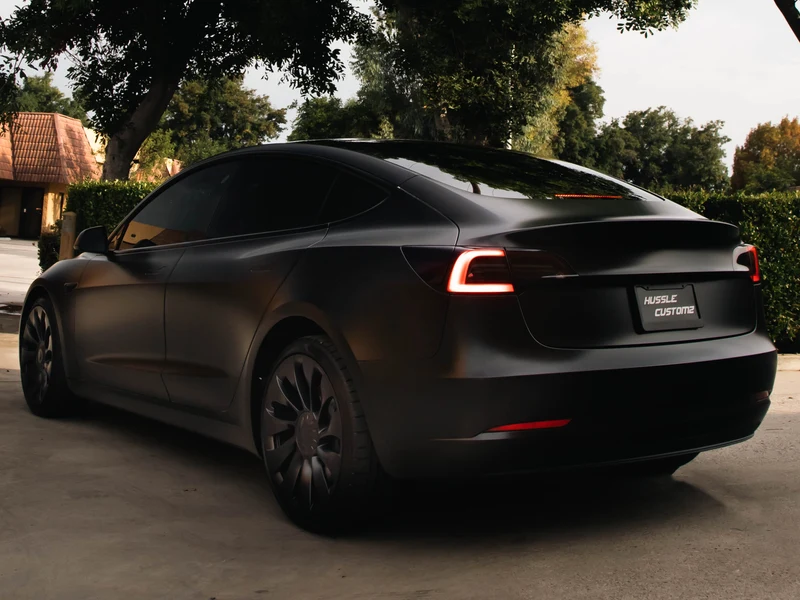
STEK PPF — Dynoshield 10y / DynoMatt 8y. Los Angeles studio.
PPF costs more than vinyl wrap for the same coverage area. The material itself is significantly more expensive, and the installation is more technically demanding — PPF is thicker, less forgiving around tight radii, and requires more precise heat work to avoid wrinkles and tension points.
The question is whether the cost difference is justified by what you're getting. For a car that spends significant time on Los Angeles freeways — where rock chips are a near-certainty — gloss black PPF pays for itself the first time it saves a resprayed bumper or a repainted hood.
Self-healing properties
Most premium PPF has thermoplastic properties that allow surface scratches to self-heal with heat exposure. A light scratch from a key or a shopping cart often disappears within hours in direct sunlight. The same scratch on vinyl film is permanent.
For a gloss black finish, which shows every surface imperfection clearly, this matters. The car stays looking correct with minimal intervention.
Longevity comparison
Quality vinyl wrap typically lasts 3-5 years in Southern California sun before the film starts to fade or lift at edges. Quality PPF is warranted for 10 years and typically outlasts that in practice.
Over a 10-year ownership period, the math can favor PPF: one installation versus potentially two vinyl wrap installations, plus the ongoing protection against chip damage that would require paint correction.
When vinyl is the right answer
Vinyl wrap is still the better choice in certain situations. If the goal is a finish change on a car that's not frequently exposed to freeway debris — a weekend car, a garage queen — vinyl makes sense. If the finish is something not available in PPF (color-shift, certain specialty finishes), vinyl is the only option. And if budget requires choosing, a vinyl wrap now with PPF later is a reasonable sequence.
The conclusion
For a daily-driven vehicle in Los Angeles that you want to keep looking correct for years without constant correction, gloss black PPF is the smarter investment. The upfront cost is higher. The total cost over time, accounting for protection against damage, is lower.