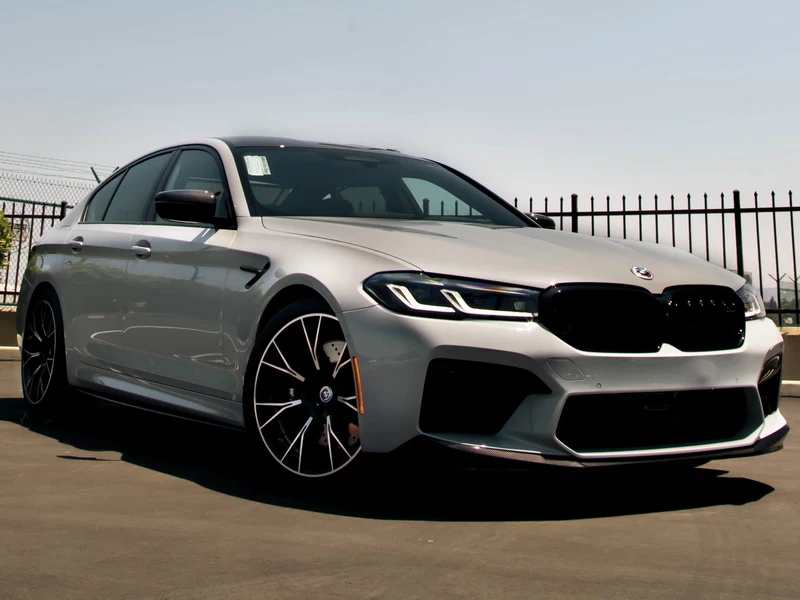
The fundamental difference
PPF protects your paint. Vinyl wrap changes your paint's appearance. Everything else — cost, lifespan, maintenance — flows from this single distinction.
Paint Protection Film is a thick (8–10 mil) urethane film engineered to absorb physical impacts. Rock chips, scratches, road debris, door dings — the film takes the hit, not your paint. It's self-healing, UV-resistant, and virtually invisible in its clear form. The car looks exactly the same, just protected.
Vinyl wrap is a thin (3–4 mil) PVC film designed for color and finish changes. Matte, gloss, satin, chrome, color-shift, textured, printed — the design possibilities are nearly unlimited. It covers your existing paint in a new appearance, and it's fully reversible when you're ready for a change.
They're not competing products. They solve different problems. The question isn't which is better — it's what you're trying to accomplish.
Detailed comparison table
Color, finish, partial or full — get a wrap quote in 24h.
| Factor | PPF (Clear) | Vinyl Wrap |
|---|---|---|
| Primary purpose | Physical paint protection | Color & finish change |
| Appearance change | None (invisible) | Complete transformation |
| Rock chip protection | Yes — absorbs impacts | No — rock chips go through |
| Scratch protection | Yes — self-healing surface | Minimal surface only |
| Self-healing | Yes — heat activated | No |
| UV protection | Strong — prevents oxidation | Moderate |
| Film thickness | 8–10 mil | 3–4 mil |
| Lifespan | 7–10 years | 3–5 years |
| Cost (full body) | from $3,200 (Tesla Model 3/Y) | from $3,200 (sedans & coupes) |
| Reversible | Yes — no paint damage | Yes — no paint damage |
| Color options | Clear only (see color PPF below) | 300+ colors & finishes |
| Warranty | Up to 10 years | 1–3 years typical |
| Maintenance | Standard wash, self-heals | Standard wash, no healing |
| Resale impact | Positive — documented protection | Neutral — cosmetic only |
Starting prices shown apply to Tesla Model 3/Y. Other vehicles are priced by model and coverage. Starting prices apply to the base film option. STEK upgrades available. Additional coverage priced separately.
What PPF does that vinyl can't
PPF's value comes from physical protection. This isn't marketing — it's physics. The film is thick enough and flexible enough to absorb impacts that would otherwise chip, scratch, or gouge your paint. A rock at 70mph on the 405 that would chip bare paint bounces off PPF. A shopping cart in a Whole Foods parking lot that would scratch the door leaves no mark on PPF.
The self-healing property is the other differentiator. Minor surface scratches — swirl marks from car washes, light key scratches, fingernail marks — heal themselves when exposed to heat. Sunlight, warm water, even a heat gun. The film's topcoat has a molecular memory that causes it to flow back into place. Your car looks freshly detailed every day without doing anything.
Vinyl wrap can't do either of these things. A rock goes through vinyl just like it goes through bare paint. And scratches in vinyl are permanent until you replace the panel.
What vinyl wrap does that PPF can't
Vinyl's strength is creative range. Hundreds of colors, dozens of finish types, specialty options that PPF doesn't offer and may never offer. Chrome wraps, color-shift films that change color depending on the viewing angle, brushed metal textures, carbon fiber patterns, custom-printed graphics — all vinyl territory.
Vinyl also wins on immediate visual impact. You can completely transform a car's identity — turn a white Mercedes into a matte olive green, make a black BMW look like it was finished in satin dark blue, give a Porsche a factory-style racing livery. The possibilities are genuinely limitless.
And vinyl is more budget-friendly. At from $3,200 for a full wrap (sedans & coupes) versus Full Body Clear PPF (Tesla Model 3/Y: from $3,200), vinyl costs less upfront for a more dramatic visual result. Starting prices shown apply to Tesla Model 3/Y. Other vehicles are priced by model and coverage. Starting prices apply to the base film option. STEK upgrades available. Additional coverage priced separately.
When PPF is the right choice
- You love your factory color and want to keep it — PPF preserves what's already there without changing anything visual
- You want to prevent physical damage — daily freeway driving, road debris, parking lot hazards. PPF is the only film that actually stops this damage
- You're keeping the car long-term — at 7–10 year lifespan, PPF is a long-term investment that outlasts vinyl by double
- Resale value matters — documented PPF is a selling point. Buyers know the paint underneath is perfect
- You drive a car with soft or expensive paint — Tesla, Porsche, BMW, Mercedes — vehicles where paint repair costs are high and the factory clear coat is thin
When vinyl wrap is the right choice
- You want a full color or finish change — vinyl is the most cost-effective way to completely change your car's appearance
- Budget is the primary consideration — vinyl delivers dramatic visual results at a lower price point than color PPF
- You want a specialty finish — chrome, color-shift, printed graphics, textures — these only exist in vinyl
- You change your look frequently — if you like a new color every 2–3 years, vinyl's shorter lifespan and lower cost make it the practical choice
- The car is a show car with minimal road exposure — if rock chips and road debris aren't a concern, the protection premium of PPF is unnecessary
Can you combine PPF and vinyl wrap?
Yes — and for years, this was the gold standard on high-end builds. The approach: vinyl wrap the entire car for the color change, then apply clear PPF over the high-impact zones — front bumper, hood, fenders, mirrors, and A-pillars. You get the look you want with protection where damage actually happens.
The downside is cost. You're paying for two products and two installations. A full vinyl wrap (from $3,200) plus front-end PPF (Tesla Model 3/Y: from $1,250) means two bills — and 60% of the car still has no physical protection.
The 2026 solution: color PPF. Color PPF combines a color change with full PPF protection in a single film. One product, one installation, full coverage. Full Body Color PPF for a Tesla Model 3/Y is from $3,700, which is often less than the vinyl + PPF combination while providing protection on every panel instead of just the front. For most daily drivers who want both a color change and protection, color PPF has replaced the vinyl + clear PPF combo. See color PPF options at husslecustomz.com. Starting prices shown apply to Tesla Model 3/Y. Other vehicles are priced by model and coverage. Starting prices apply to the base film option. STEK upgrades available. Additional coverage priced separately.
Color PPF: the third option
Color PPF deserves its own section because it fundamentally changes the PPF vs vinyl conversation. It's paint protection film with color built into the urethane — same thickness, same self-healing, same rock-chip protection as clear PPF, but in a specific color and finish.
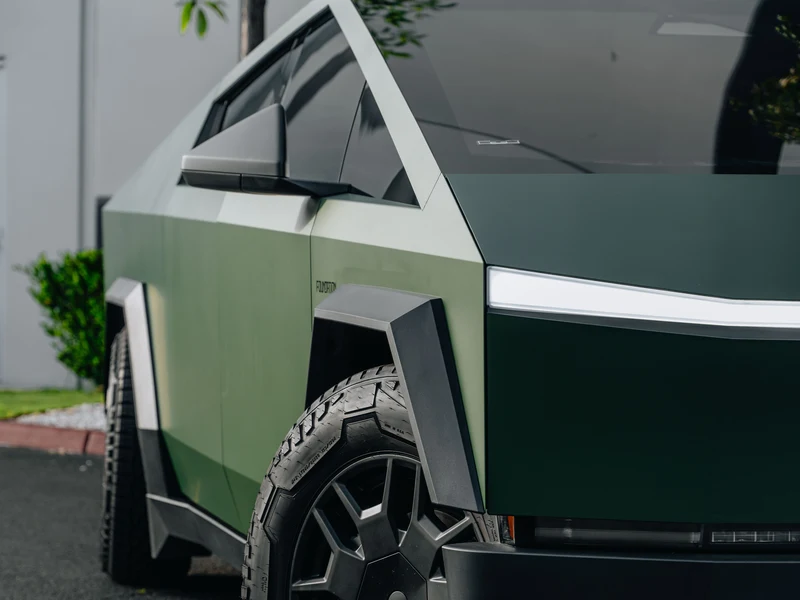
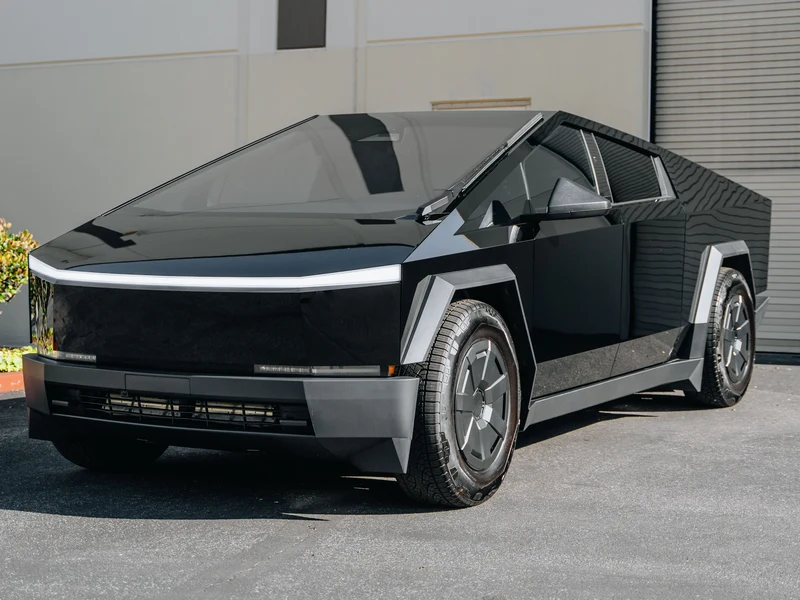
Available finishes include gloss black, matte black, satin grey, military green, chalk grey, and more — with new colors added regularly by STEK and other leading manufacturers. The palette isn't as large as vinyl's, but it covers the most popular finishes that represent the majority of what clients actually choose.
Color PPF makes sense when you want protection and a color change, plan to keep the car 3+ years, and the finish you want is available in PPF. It eliminates the need for two products and provides a longer-lasting, self-healing result that vinyl simply cannot match.
The cost per year comparison
Upfront cost doesn't tell the whole story. Here's how the math works over time:
| Product | Upfront Cost | Lifespan | Cost Per Year (relative) |
|---|---|---|---|
| Clear PPF (full body) | from $3,200 | 7–10 years | Low — spread over 7–10 years |
| Vinyl wrap (full body) | from $3,200 | 3–5 years | Higher — rewrap every 3–5 years |
| Color PPF (full body) | from $3,700 | 7–10 years | Low — spread over 7–10 years |
| Vinyl + front PPF | Wrap + front PPF (from $1,250) | 3–5 years (vinyl) | Highest — two products, two installs |
Starting prices shown apply to Tesla Model 3/Y. Other vehicles are priced by model and coverage. Starting prices apply to the base film option. STEK upgrades available. Additional coverage priced separately. Starting price shown applies to sedans & coupes; other vehicles are priced by category and model.
Starting prices: full wrap of the exterior body panels in a standard vinyl color (exterior only). Not included: door jambs and chrome parts. Quoted individually: special colors, chrome / iridescent / textured films, non-standard materials, additional work. The final price is confirmed with your quote.
PPF and color PPF cost less per year than vinyl wrap despite higher upfront prices. And PPF provides physical protection the entire time — something vinyl never does regardless of how much you spend.
Installation differences
Both products require professional installation, but the process differs:
- PPF requires more precision — edges must be wrapped or tucked, bumpers and lights often removed for proper coverage, and the thicker material needs more time to conform to complex curves. For approved Tesla packages, Full Body PPF takes 2 working days (the date is confirmed separately); time for other vehicles is confirmed with the quote
- Vinyl wrap is faster but less forgiving — the thinner material stretches more easily but is also more prone to lifting at edges if not sealed properly. A full wrap typically takes 2–4 days
- Both require clean, controlled environments — dust, temperature, and humidity all affect the outcome. Any shop doing quality work should have a dedicated, climate-controlled installation bay
Making the decision
Ask yourself three questions:
1. Do I need to protect the paint? If yes — PPF or color PPF. Vinyl won't do it.
2. Do I want to change the color? If yes — vinyl wrap, color PPF, or vinyl with clear PPF on the front. If no — clear PPF.
3. How long am I keeping the car? Keeping it 3+ years? PPF or color PPF's longer lifespan delivers better value. Trading in 1–2 years? Vinyl's lower upfront cost makes more sense.
The right answer isn't the same for everyone. It depends on your car, your driving, your budget, and what you actually want out of the product. That's why we don't push one over the other — we talk through the options, look at the car, and recommend what makes sense for your specific situation.
Frequently Asked Questions
What is the difference between PPF and vinyl wrap?
PPF (Paint Protection Film) is a clear or colored urethane film designed to physically protect your paint from rock chips, scratches, and road debris. Vinyl wrap is a thin PVC film designed to change your car's color and finish. PPF protects, vinyl transforms. They solve different problems and are not interchangeable.
Can you put PPF over vinyl wrap?
Yes, clear PPF can be applied over vinyl wrap on high-impact areas like the hood, bumper, and fenders. This gives you the color change from vinyl with physical protection where debris hits most. However, this dual-layer approach costs more than either product alone. Color PPF is the alternative — one film that does both jobs.
Is PPF or vinyl wrap better for a daily driver?
For a daily driver that commutes on freeways, PPF is the better investment because it prevents the rock chips, scratches, and road damage that accumulate on daily-driven vehicles. If you also want a color change, color PPF gives you protection and a new look in one product. Vinyl wrap alone does not protect against physical damage.
How long does PPF last compared to vinyl wrap?
PPF lasts 7–10 years with proper care, backed by manufacturer warranties. Vinyl wrap lasts 3–5 years before showing signs of wear, fading, or lifting — especially in sun-heavy climates like Los Angeles. PPF roughly doubles the lifespan of vinyl wrap.
Which costs more: PPF or vinyl wrap?
Full Body Clear PPF for a Tesla Model 3/Y: from $3,200. Full body vinyl wrap: from $3,200. Starting price shown applies to sedans & coupes; other vehicles are priced by category and model. Full Body Color PPF for a Tesla Model 3/Y: from $3,700. PPF costs more upfront, but its longer lifespan means the cost per year is often comparable to or less than vinyl wrap when calculated over the life of each product. Starting prices shown apply to Tesla Model 3/Y. Other vehicles are priced by model and coverage. Starting prices apply to the base film option. STEK upgrades available. Additional coverage priced separately.
What is color PPF and is it better than vinyl wrap?
Color PPF is paint protection film with color built into the urethane — it changes your car's color while providing full rock-chip and scratch protection with self-healing properties. It's better than vinyl wrap if you want both protection and a color change, plan to keep the car 3+ years, and the color you want is available in PPF. Vinyl wrap is better if you need a specialty finish or want the lowest upfront cost.
Clear PPF, color PPF, and vinyl wrap — all at our Los Angeles studio. We'll recommend what makes sense for your car.