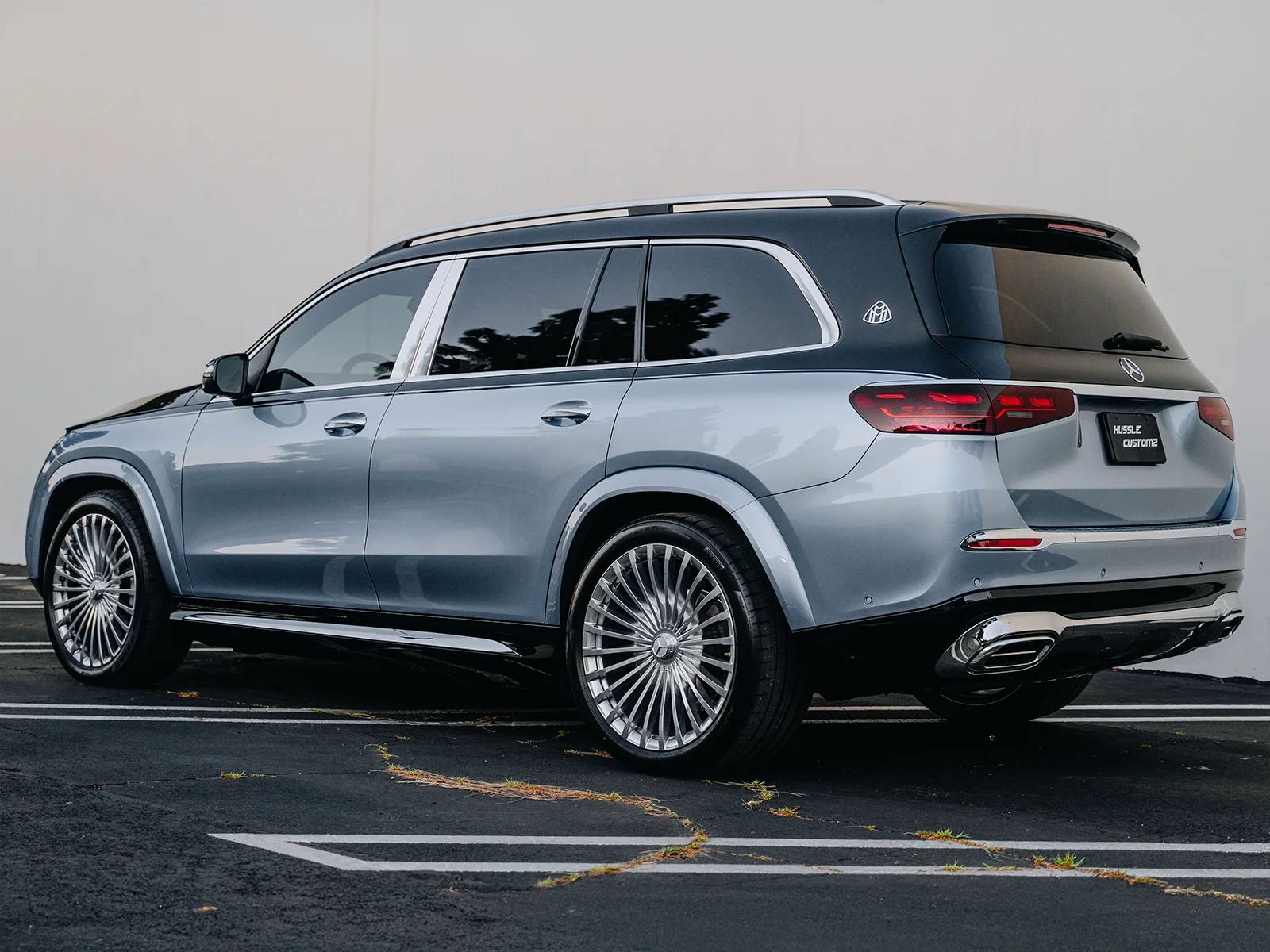
The PPF install conversation usually starts with cost. The actual install itself — what happens at the studio, how long it takes, and what separates a good install from a budget one — is where the durability comes from. This guide walks the install process tier by tier, from a partial front to a full body. From a STEK-certified shop in Los Angeles that has installed PPF on roughly every premium vehicle category since 2019.
Timeline at a glance
Three install tiers cover most LA bookings. Each is a different scope. For approved Tesla packages, Full Front takes 1 working day and Full Body takes 2 working days; the date is confirmed separately. Time for other vehicles and other coverage is confirmed with the quote.
| Install tier | Coverage | Total time | Pickup |
|---|---|---|---|
| Partial front | Bumper + hood leading edge + mirrors | Confirmed with the quote | Confirmed with the quote |
| Full front end | Bumper + full hood + full fenders + mirrors | 1 working day for approved Tesla packages; other vehicles: confirmed with the quote | Date confirmed separately |
| Track Package | Full front + rocker panels + rear wheel arches | Confirmed with the quote | Confirmed with the quote |
| Full body, clear | Every painted panel | 2 working days for approved Tesla packages; other vehicles: confirmed with the quote | Date confirmed separately |
| Full body, color or matte | Every painted panel, specialty film | 2 working days for approved Tesla packages; other vehicles: confirmed with the quote | Date confirmed separately |
Partial front
- Time
- Confirmed with the quote
- Pickup
- Confirmed with the quote
Full front end
- Time
- 1 working day for approved Tesla packages; other vehicles: with the quote
- Pickup
- Date confirmed separately
Track Package
- Time
- Confirmed with the quote
- Pickup
- Confirmed with the quote
Full body, clear
- Time
- 2 working days for approved Tesla packages; other vehicles: with the quote
- Pickup
- Date confirmed separately
Full body, color/matte
- Time
- 2 working days for approved Tesla packages; other vehicles: with the quote
- Pickup
- Date confirmed separately
For pricing on each tier, see our PPF cost guide for Los Angeles. The sections below walk what we actually do during each install timeline.
Partial front install
Partial front is the entry tier. It covers the panels that chip first on LA freeways — bumper, hood leading edge, and mirror caps. Install time is confirmed with the quote.
Step by step
- Check-in: Customer check-in, walk-around with installer, document existing paint condition with photos.
- Prep: Hand wash, clay bar, chemical decontamination of front panels.
- Correction: Light paint correction on hood and bumper if needed (removes swirls before film locks them in).
- Application: Bumper and mirror caps removed, film cut and applied panel by panel, edges wrapped.
- Finish: Reassembly, edge heat-set, final inspection under studio lighting, walk-through with customer.
After pickup you are back on the road. The film bonds for the next 7 days while you drive normally — see the post-install care section below.
Track Package install
Track Package extends partial front to include rocker panels and the rear-wheel arch areas — the two zones most likely to take chip damage on LA freeways from rear-tire kick-up and merging traffic. Best for daily commuters with heavy 405/101/110 mileage.
Stage 1 — front and lower panels
- Decontamination + light correction across front and lower panels
- Bumper, mirrors, lower trim removal
- Front-end film application (hood, fenders, mirrors, bumper)
- Rocker panel film application
Stage 2 — rear arches and finishing
- Rear arch film application
- Edge heat-set across all installed panels
- Final inspection + reassembly + walk-through
Track Package install time depends on the vehicle and is confirmed with the quote, with the cure window built in.
Send year, make, model, and tier — same-day quote with the actual hours.
Full body install
Full body is the top tier. Every painted panel gets covered: bumpers, hood, fenders, doors, roof, quarter panels, trunk lid. This is where studio time vs. driveway install starts to matter — full body needs serious panel removal and a cure window that doesn't compress into a same-day rush. For approved Tesla Full Body packages the install takes 2 working days, and the date is confirmed separately; time for other vehicles is confirmed with the quote.
Prep and disassembly
- Customer check-in, walk-around photo documentation
- Multi-stage hand wash, clay bar, full chemical decontamination of every panel
- Light paint correction across the vehicle (1-2 stages of polish if paint is in good shape; 2-3 stages if owner reports swirl marks or fine scratches)
- Door handles, mirror caps, badges, side moldings, both bumpers, lower trim removed
Film application
- Each panel cut and applied individually using STEK DAP templates or hand-cut where needed
- Body lines, complex curves, and tight inside corners worked by hand
- Edges wrapped behind every panel — door handles, badge holes, gasket lines, gas door
- Heat-set on every edge to lock the film and prevent lifting
Finishing
- Reassembly: bumpers, mirrors, handles, badges, trim back on
- Track and frunk gasket detailing
- Film warranty registered to your VIN at this stage
Cure check + delivery
- Final inspection under controlled studio lighting
- Customer walk-around, post-install care brief, delivery
Color PPF and matte PPF need additional film material handling and panel-by-panel color matching. For approved Tesla Full Body packages the 2 working days apply to clear, matte, and color; for other vehicles time is confirmed with the quote. See our Tesla Model Y PPF guide for vehicle-specific examples.
Pre-install prep — what happens before the film goes on
This is the step budget shops cut. Skipping prep saves 2-4 hours of labor per car but locks every existing paint imperfection under the film for the next decade.
Decontamination
Hand wash with pH-neutral soap, clay bar to lift bonded contaminants (tree sap, brake dust, road tar, industrial fallout), chemical decontamination with iron-removal spray. The goal: every surface that PPF will bond to is microscopically clean.
Paint correction
Light single-stage polish at minimum — removes swirl marks, light scratches, fine etching. Two-stage correction if the paint shows medium swirls or buffer trails from a previous detail. Three-stage on cars with deeper defects. Whatever paint condition you have at install is the paint condition you'll see when the film comes off in 8 years.
Panel removal
Bumpers, mirror caps, door handles, badges, side moldings, gas door, lower trim. The film wraps behind every removed component for a seamless install. Cut-in installs (where the film stops at the gasket without removing the panel) are 4-6 hours faster but show edges and lift sooner.
If a quote does not include "panel removal" as a line item, the shop is doing cut-in. More red flags in PPF quotes.
Film application — the most labor-intensive step
This is where the install crew earns the price tag. Each panel is treated as its own micro-project: pre-cut to size, sprayed with installation solution (a mix of soap and water that lets the film slide), positioned, squeegeed, edge-wrapped, heat-set.
Cutting
Two methods. Pre-cut templates from STEK DAP (Design Access Program) or KPMF — vehicle-specific patterns that reduce hand-cutting time. Hand-cut on the car for vehicles where templates don't fit or aren't available (newer Cybertruck panels, exotic supercars with bodywork variations, post-refresh Teslas before templates are released). Hand-cut takes 40-60% longer per panel.
Stretching
PPF is engineered to stretch into curves without distortion or thinning. Heat softens the film; tension shapes it. Tight inside corners (bumper intakes, mirror cap undersides, fender flares) need controlled heat-and-pull to avoid silvering or air pockets.
Edge wrapping
The single most-skilled part of the install. Every edge — panel boundaries, badge holes, gasket lines — is wrapped behind the visible surface so no film edge shows. Lifted edges are the #1 failure mode on cheap installs; properly wrapped and heat-set edges hold for 8-10 years.
Heat-set
Heat gun applied along every edge after wrapping to activate the adhesive bond. Skipped or under-applied heat-set is what causes the typical "film lifting at year 1" problem people complain about online.
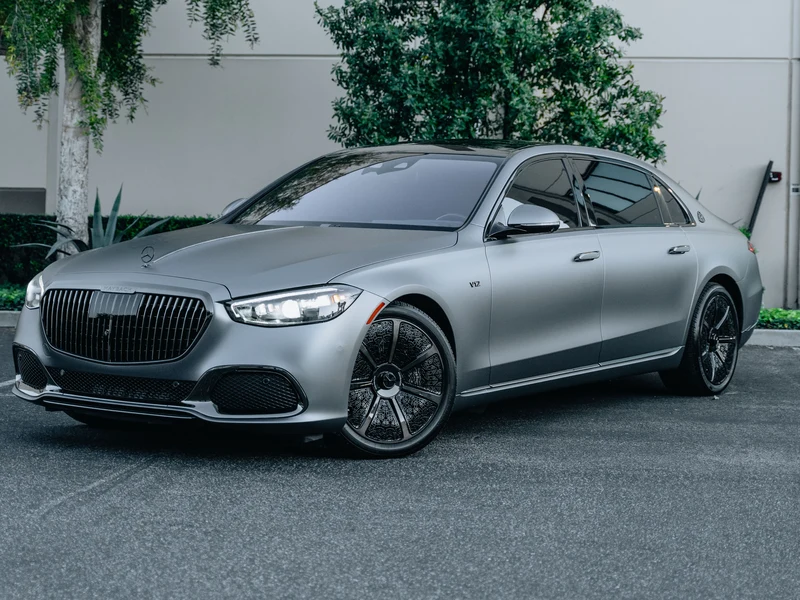
The cure window — 24 to 48 hours
After film application, the adhesive needs time to fully bond to the paint. We keep full-body installs in studio through the initial cure at room temperature. This is non-negotiable for two reasons.
Adhesive bond strength
STEK PPF reaches 80% bond strength in the first 12 hours, 95% by 24 hours, and full 100% by 7 days. The first 24-48 hours are the critical window where film is most vulnerable to edge lift, contamination, and water intrusion. Driving immediately stresses still-bonding edges; pressure-washing in the first week peels them.
Studio environment
We control humidity, temperature, and dust during the cure. Driveway installs and mobile installs cannot — wind blows debris, temperature swings stress edges, dew accumulates overnight. The cure environment is half of what you pay for at a real studio.
If a shop offers same-day pickup on a full body install, they're skipping cure. The film will look fine on day one and start lifting at month one.
The first three months after install are when adhesive fully cures. No automatic car washes, no pressure-washing within 12 inches of edges, no clay bar, no waxes designed for paint. Hand wash with pH-neutral soap only. Done right, the install holds clean for the full warranty lifespan.
Vehicle-specific install differences
Tier and time are general. Some vehicles take longer because of their geometry, panel complexity, or panel material.
Tesla (Model 3 / Y / S / X / Cybertruck)
Tesla paint is thinner than the segment average, which means paint-correction step matters more (you can't aggressive-polish thin paint). Cybertruck adds stainless-panel handling — film application differs from clear-coated steel because there's no clear coat to bond against.
German luxury (BMW / Mercedes / Audi / Porsche)
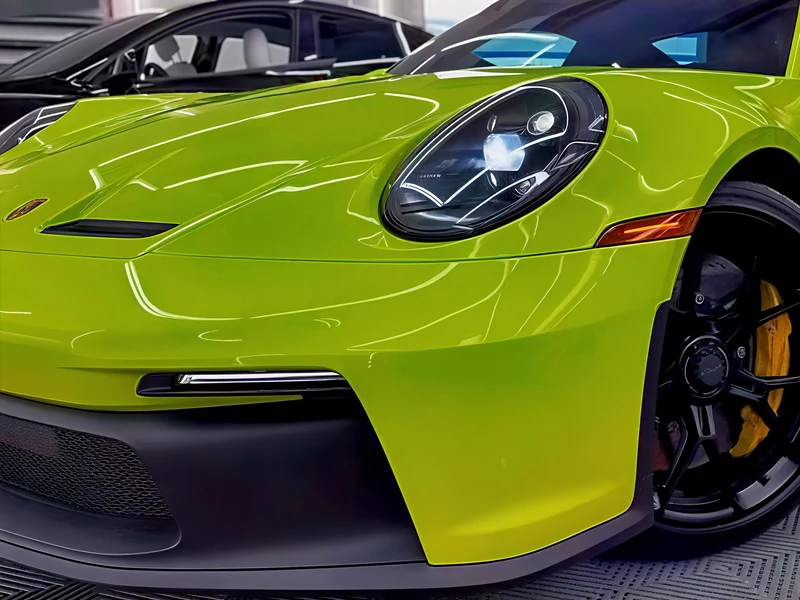
Heavier panel removal — German cars have more trim pieces, more visible chrome to wrap, more attached body components. More disassembly time than a Tesla — install time is confirmed with the quote. Compensated by often-better factory paint that needs less correction.
Range Rover / G63 / Cadillac Escalade
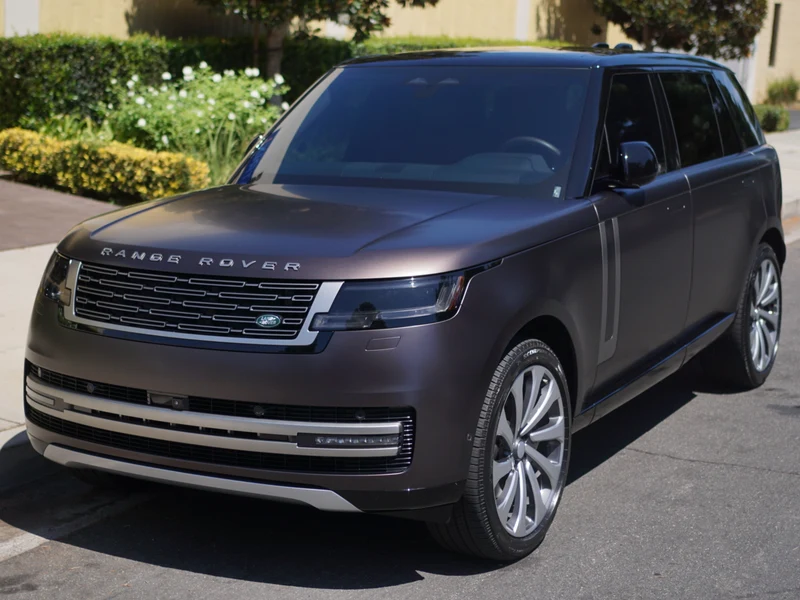
Largest scope. More square footage, more complex body lines, and on G-Wagon/Cybertruck/Escalade — more vertical body panels that need more squeegee per square foot. Install time is confirmed with the quote.
Supercars / exotics (Lamborghini / McLaren / Ferrari)
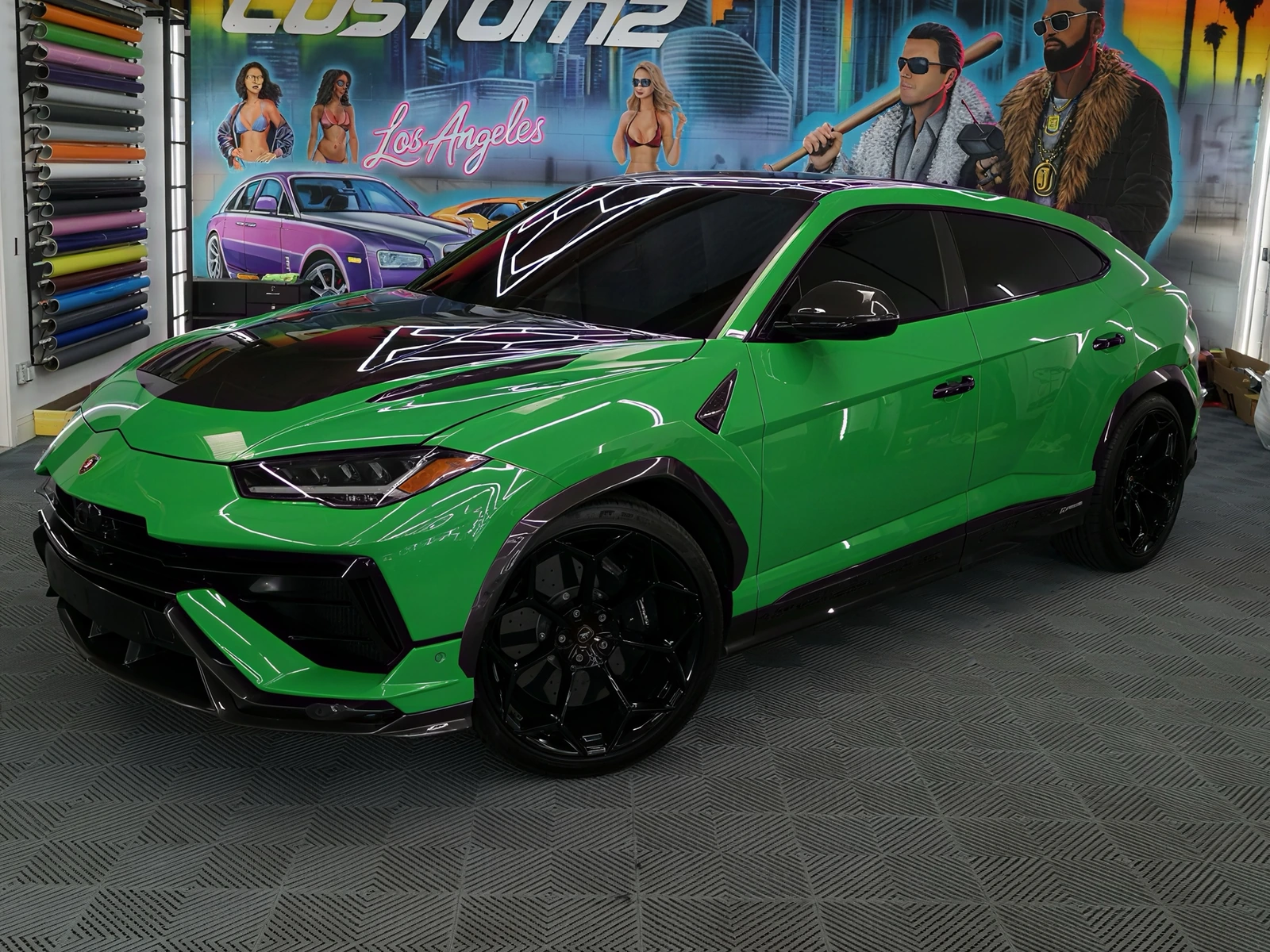
Carbon-fiber inserts, complex aero panels, and panel-removal complexity that doubles labor. Hand-cut everywhere — no DAP templates fit a McLaren accurately. Install time is confirmed with the quote.
First 90 days after install — what to do and what to avoid
The first three months matter most. Adhesive is still bonding, edges are still settling, and minor faults that would never show up on a properly cared-for install will show up on a poorly cared-for one.
Do
- Hand wash with two-bucket method and pH-neutral soap (Meguiar's Gold Class, CarPro Reset, Adam's Car Shampoo are safe).
- Drive normally — freeway, surface streets, normal weather. PPF is engineered to take road impacts during cure.
- Park in shade or garage when possible. Sun exposure during cure is fine but extreme heat (parked in 110°F direct sun for 8h) accelerates edge stress.
- Inspect edges weekly for the first month. If anything lifts, photo it and bring the car back — we re-seal under warranty.
Don't
- Automatic car washes — brushes catch edges and pull film off.
- Pressure washers within 12 inches of any edge for the first 90 days. After day 90, OK with 40° fan tip ≥1500 PSI.
- Clay bar, polish, or wax for the first 30 days minimum. The film is still bonding; abrasion stresses edges.
- Bird dropping or sap left to sit. Wipe immediately with a wet microfiber. PPF resists chemical etch but isn't immune for the first month.
For the long-term care guide that takes over after day 90, see PPF maintenance guide.
The pattern we see at year three. Customers who followed the 90-day protocol religiously have installs that look like day-one. Customers who used automatic washes in the first month or pressure-washed edges before cure come back at year one with edge lift and small detachments. Same shop, same film, same installer — different outcomes from the first 90 days alone. Worth the discipline.
Frequently asked questions
How long does a full-body PPF install take?
For approved Tesla Full Body packages (clear, matte, or color): 2 working days at our Los Angeles studio; the date is confirmed separately. For other vehicles, time is confirmed with the quote. The sequence: prep and panel removal, film application, reassembly + warranty registration, final inspection and pickup. The cure window between application and pickup is non-negotiable for a quality install — it's why studio installs outlast driveway/mobile installs.
How long does a partial front PPF install take?
Partial front (bumper + hood leading edge + mirrors): time is confirmed with the quote. Full front end (bumper + full hood + full fenders + mirrors) takes 1 working day for approved Tesla packages, with the date confirmed separately; time for other vehicles is confirmed with the quote.
Why do shops need 24-48 hours to cure PPF?
STEK PPF reaches 80% adhesive bond strength in the first 12 hours, 95% by 24 hours, and 100% by 7 days. The first 24-48 hours are the critical window where film is most vulnerable to edge lift, contamination, and water intrusion. Studio environment controls humidity, temperature, and dust during cure — driveway and mobile installs can't do this and the film fails earlier as a result.
Can I drive my car right after PPF installation?
Yes, once you pick it up. Every install includes a studio cure window before pickup, and full-body cars stay with us through it. After that you can drive normally including freeway and weather, but no automatic car washes or pressure-washing for the first 90 days.
What's included in pre-install prep?
Hand wash, clay bar, chemical decontamination (iron-removal spray), and light single-stage paint correction at minimum. Two-stage or three-stage correction if the paint shows swirls. Whatever paint condition exists at install is locked under the film for the next 8-10 years, so prep is non-negotiable. Quotes that don't include prep as a line item are skipping it to save labor.
What's the difference between cut-in installs and panel-removal installs?
Panel-removal installs remove door handles, mirror caps, badges, and bumpers so the film wraps behind every visible edge. Cut-in installs leave panels in place and stop the film at the gasket or seam — visible edges remain and lift sooner. Panel-removal adds 4-8 hours of labor on a full-body but is the only way to get a clean 8-10 year install. Most LA shops quoting over $4,000 for full body (market range, not Hussle pricing) do panel-removal; budget shops cut in.
What can go wrong during PPF installation?
Three common issues: (1) trapped contamination (clay bar step skipped) shows as small bumps under the film at year one; (2) silvering or cloudy patches when film is over-stretched without enough heat — usually appears within first month; (3) lifted edges from missed heat-set step — appears within first 6 months. Quality shops catch all three at the final inspection step before delivery; budget shops don't inspect or skip the inspection altogether.
Clear / matte / color PPF on approved films, including STEK. Studio cure window included. VIN warranty registered at install. Same-day quote.