Why consider it right after you buy the car
Every freeway mile adds wear to the front glass. Small stones thrown up by trucks, gravel at construction zones and grit kicked up in traffic gradually leave chips and fine pitting on the windshield. Those marks cannot be removed by covering them with film. A protective layer only makes sense over glass that is still in good condition.
That is the main reason timing matters. Glass in good condition provides a better starting point; even a newly delivered vehicle needs an inspection before installation. Once a chip appears, the conversation changes: the chip may need to be repaired first, or the glass may no longer be a good candidate for film at all.
Protection is a choice, not an obligation. Some owners will never chip a windshield; others will lose one in their first year. The film shifts some of that risk onto a replaceable layer. Whether that is worth it depends on your car, your glass and how you drive.
What exterior windshield protection film is
Windshield protection film is a clear film installed on the outside of the windshield, the side that faces the road. It is cut and fitted to your specific glass.
Its job is simple: to be the first surface that small debris hits. When the film is scuffed, pitted or worn by wipers over time, it can be removed and replaced. The glass underneath is what you are trying to keep in good condition.
Think of it as a sacrificial layer, not as armor. It helps reduce the risk of chips from small stones and road debris. It does not make the windshield unbreakable.
How it differs from ceramic tint and glass coatings
Three different products are often confused because they all involve the windshield. They solve different problems.
| Compare | Exterior windshield protection film | Interior ceramic windshield tint | Glass coating |
|---|---|---|---|
| Where it goes | Outside surface of the windshield | Inside surface of the windshield | Outside surface, as a thin liquid-applied layer |
| Main purpose | A replaceable layer that helps reduce chips from small debris | Reducing heat through the glass | Helping water bead and clear from the glass |
| Helps with rock chips? | Yes, it is designed for this, within limits | No, it is on the inside | No |
| Replaceable when worn? | Yes | Yes | Reapplied as it wears |
Interior tint and exterior windshield protection may be combined when the selected materials and vehicle are compatible. If heat is your main concern, read our guide to clear ceramic windshield tint in California. This article covers the outside layer only.
Four groups of vehicles, four different reasons
The service is not limited to expensive cars. The vehicles below describe who typically asks about it. They are examples of audiences, not a list of confirmed compatibility. Every car is checked individually (see the section on cameras and head-up displays below).
| Group | Typical vehicles | Why owners consider protection |
|---|---|---|
| Luxury, premium and exotic | Porsche, Mercedes-Benz, BMW, Range Rover, Ferrari, Lamborghini | The cost and availability of the correct replacement glass, and, on equipped versions, the cameras, sensors and head-up display that work through the windshield |
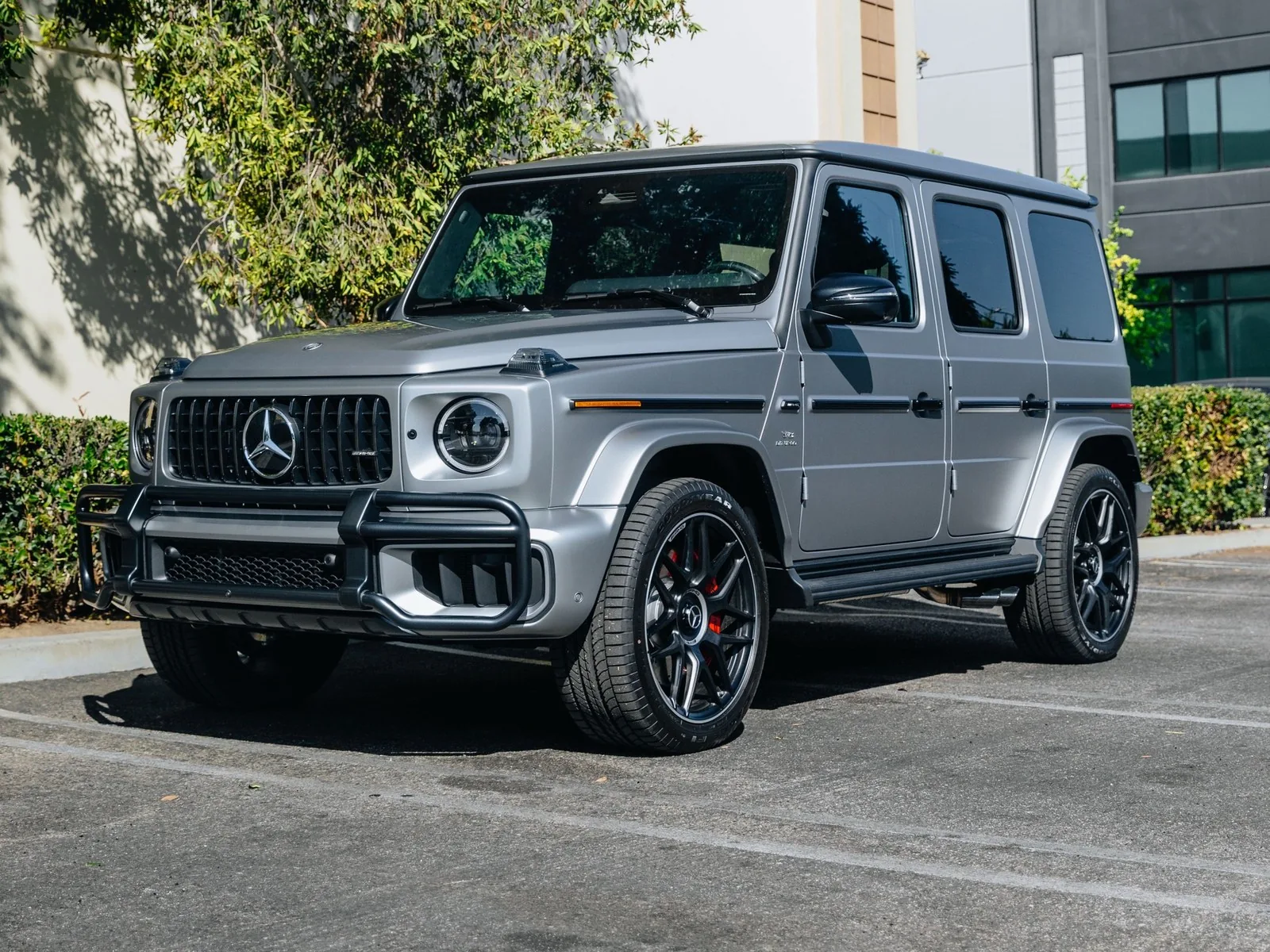
| Off-road and adventure | Jeep Wrangler, Ford Bronco, Land Rover Defender, Mercedes G-Class, Toyota Land Cruiser, Rivian | Gravel, loose debris and unpaved routes. The material has to be selected for this kind of use |
| Track and performance | Sports cars that see track days | Track surface particles and debris from cars ahead. Suitability of the material for track use is confirmed separately for each car |
| Everyday vehicles | Tesla Model 3 and Model Y, sedans, crossovers, family cars | Regular freeway driving and daily road exposure. The windshield sees the same debris whatever the car costs |
Luxury, premium and exotic
On many high-end vehicles, a windshield is not just a sheet of glass. It may be a specific acoustic or heated glass, and on equipped versions it works together with forward cameras, sensors and a head-up display. A replacement can mean ordering the correct part, waiting for it and, where required, recalibrating the systems behind it. For these owners, reducing the chance of a chip is mainly about avoiding that process.
Off-road and adventure
Trucks and SUVs that leave the pavement see a different kind of debris: gravel roads, trailheads, desert routes and the dust and stones thrown up by other vehicles. For this use, the film is not a one-size choice: the material is selected for the conditions, and we will tell you plainly if we think your use is beyond what the film is suited for.
Track and performance
On track, the car ahead throws rubber, grit and surface particles at speed. Owners who track their cars often already protect the paint. The windshield is the next logical surface. Suitability of a film for track use is confirmed separately for each car and use case; we do not assume that a material chosen for street driving is right for the track.
Everyday vehicles
A Tesla Model Y on the 405 meets the same gravel truck as a supercar. For daily drivers with long freeway commutes, the reason to consider protection is simply exposure: many miles, many trucks, many chances for a chip. This is a practical service for ordinary cars, not only for collectors.
What the film helps with, and what it does not
| The film helps reduce | The film does not guarantee |
|---|---|
| The risk of chips from small stones and road debris | That the windshield will never chip, crack or scratch |
| Fine pitting on the glass surface from daily driving | Protection from large rocks, heavy impacts or collisions |
| Wear on the original glass, by taking it on a replaceable layer | Freedom from glare, texture or visual distortion |
The honest summary: the film lowers the odds, it does not remove them. A large stone at freeway speed can still damage the glass behind the film, and the film does not mean that a glass replacement will be paid for. We also do not promise that the film pays for itself. That depends on what would have happened without it, which nobody can know in advance.
If your windshield already has chips or cracks, the film will not repair them. We look at the glass first and tell you whether it is a suitable candidate, or whether a repair or replacement should come first.
Cameras, sensors and head-up displays
Many modern cars use the windshield as a window for driver-assistance cameras and sensors, and some project a head-up display onto it. That is why we do not treat windshield film as a generic install.
Before quoting, we check your specific vehicle and its equipment:
- where the camera and sensor areas are and how the film relates to them;
- whether a head-up display is fitted and how it may interact with the film;
- the condition and type of the glass.
We do not claim that windshield film is compatible with every driver-assistance system or head-up display, and we do not claim it is permitted in every situation. If we have concerns about a particular car or area of the glass, we tell you before any work starts. Some vehicles may not be suitable.
Wipers, cleaning and visual character
An exterior film lives where the wipers do, so it needs a little care:
- Keep wiper blades clean and replace them when worn. A worn or dirty blade drags grit across the film and shortens its useful life.
- Use washer fluid; avoid dry wiping where you can.
- Expect a visible surface character. Exterior film may show a slight texture or optical effect, particularly in certain light, and some visible texture may develop over time. We explain this before installation.
- Plan for replacement. The film is designed as a replaceable protective layer. When it becomes worn, pitted or scuffed, it is removed and replaced. How long that takes depends on driving, wipers and conditions, so we do not quote a fixed lifespan.
You receive care instructions with the installation.
How much windshield protection film costs in Los Angeles
Windshield protection film at Hussle Customz starts from $650.
That is a starting price, not a price for every car. The final quote depends on:
| Factor | Why it affects the price |
|---|---|
| Vehicle | Different cars have different glass and different equipment around it |
| Size and shape of the glass | Larger and more curved windshields take more material and more fitting work |
| Condition of the glass | Existing chips, pitting or previous repairs affect whether and how the glass can be protected |
| Required preparation | Some windshields need more cleaning and preparation before installation |
We confirm the price for your car before any work is booked.
Send the vehicle, year, glass condition and how you drive.
When windshield protection makes less sense
It is not the right purchase for everyone. It may be less justified if:
- you drive very little, or mostly on quiet local streets;
- your windshield is inexpensive and easy to replace, with no cameras or head-up display involved;
- your insurance already covers glass replacement with little or no personal cost. Glass coverage and deductibles vary by policy, so check yours;
- your glass already has damage that would need repair or replacement first.
If that sounds like your situation, we will tell you so. Paint protection, tint or nothing at all may be the better use of your budget.
Combining it with other new-car protection
Many owners plan windshield protection together with paint protection film on the front of the car, because the same freeway debris hits both the paint and the glass. If you are planning everything for a new car, our new car protection checklist explains the usual order, and Full Car PPF vs Front End compares coverage levels for the paint. For what LA roads do to unprotected paint, see Paint Damage in LA.
Frequently asked questions
Is windshield protection film the same as windshield tint?
No. Windshield protection film is a clear layer on the outside of the glass that helps reduce chips from road debris. Ceramic windshield tint goes on the inside and is about heat. They are separate services with separate quotes.
Will the film stop every rock chip?
No. It helps reduce the risk of chips from small stones and debris. A large or fast-moving stone can still damage the glass, and we do not promise that the windshield will never chip or crack.
Does it work with driver-assistance cameras and a head-up display?
It depends on the vehicle. We check the camera and sensor areas, any head-up display and the glass before quoting. We do not claim universal compatibility, and some vehicles may not be suitable.
Can you install it over an existing chip or crack?
The film does not repair damage. We inspect the glass first and tell you whether it is a good candidate or whether repair or replacement should come first.
Will I see the film?
It is clear, but exterior film can show a slight texture or optical effect in some light, and some texture may develop over time. We explain this before installation.
How long does it last?
It depends on driving, wiper condition and exposure. The film is a replaceable layer: when it is worn, it is removed and replaced. We do not quote a fixed lifespan.
How much does it cost?
It starts from $650. The final price depends on the vehicle, the size and shape of the glass, its condition and the preparation needed. It is not the same for every model.
Is it worth it for an ordinary daily driver?
It can be, especially with a long freeway commute. It is less likely to be worth it with low mileage, an inexpensive windshield or glass coverage that costs you little. We are happy to tell you which side of that line you are on.
Request a Windshield Protection Quote
The quote form opens with Windshield Protection Film already selected. In Notes, please add:
- the year of your vehicle (and trim, if it has a head-up display or driver-assistance package);
- the condition of the glass: new, or any existing chips, cracks or previous repairs;
- how you drive: daily freeway commute, occasional use, off-road, or track days.
Hussle Customz, Van Nuys, Los Angeles. By appointment only. Call (626) 537-3333.
Hussle Customz, Van Nuys, Los Angeles. By appointment only.